This isn't a trip report. I lived out here. What follows is what I wish every visitor knew before they arrived.
Most guides to Uluru are written by people who flew in for two nights. I lived and worked at the resort for three years, and I'll tell you straight: the day-to-day can be hard, the wildlife is real, and it looks nothing like the desert you're picturing. But there is a sky out there I have never seen bettered anywhere in Australia — and that, in the end, is the whole point of coming.
First: it's not the Sahara
If you're imagining rolling golden sand dunes, adjust your expectations now, because that isn't the Red Centre. The earth here is red — properly, deeply red, the kind that stains your shoes — and it's covered in low, scrubby trees and vines, not empty sand. It's alive, too. The ground is full of tiny hopping mice, lizards everywhere you look, scorpions, and yes, snakes — including some of the most venomous in the world, where a bite is a genuine, get-to-hospital-now emergency. None of this is a reason not to come. It's a reason to come with your eyes open and closed-in shoes on.
People come expecting the Sahara. What they get is a red, living, spiky place with the best sky on Earth.
The heat is a different animal
Summer heat out there isn't like a hot day in the city. It's like opening an oven door — a wall of it that hits you when you step outside. The asphalt gets so hot that flip-flops (we call them thongs) literally stick and start to melt to the ground; out here you simply do not wear them, no matter how brutal the day is. Closed shoes, always.
And then — this catches everyone out — the nights are cold, even in summer. The day-to-night swing can be more than 30 degrees. You can be melting at lunchtime and genuinely shivering after dark on the same day. So whatever season you come, pack for both: sun protection and light clothes for the day, and a proper warm layer for the evening. This one mistake ruins more visits than any other.
The flies. Oh, the flies.
In the warmer months, the flies are a force of nature. Do not open your mouth outdoors — I once, mid-sentence, swallowed one and stored it for good. You'll walk around with thirty of them riding on your back like it's normal, because out here it is. A fly net over your hat is not optional; it's the difference between enjoying yourself and slowly losing your mind. They sell them everywhere. Buy one the moment you arrive and wear it without shame — everyone does.
The wildlife, and the dingoes
Beyond the snakes and scorpions, the animal you'll actually think about is the dingo. Here's the rule I was taught working there: one dingo on its own is fine — it's just passing through. But if you see three together, that's a hunting pack, out because they're hungry, and you pay attention. Honestly, we were never told a great deal about what to do beyond the basics: don't run away, and stay together in a group. Add the standard advice too — never feed them, keep your distance, and keep food and rubbish secured. Treat them as the wild animals they are and you'll be fine.
And then there's the sky
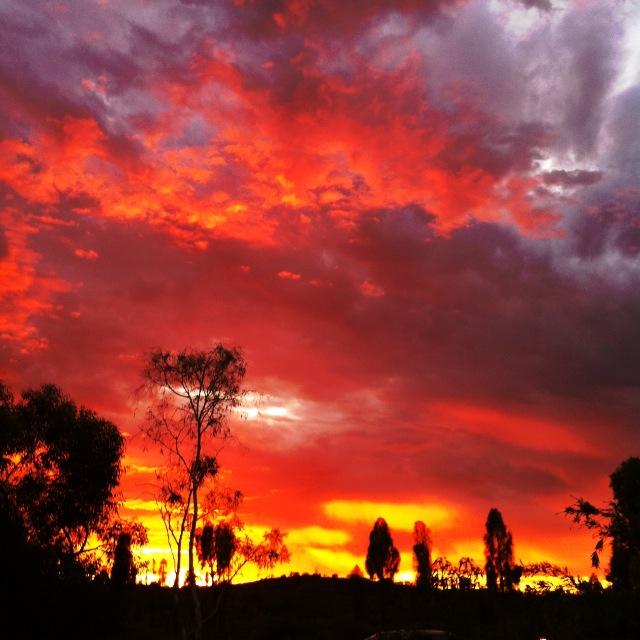
Everything I've just told you is the price of admission. This is what you're paying for. The sunrises and sunsets over Uluru are, plainly, the reason I lasted three years out there — the sky turns colours I don't have words for, and the rock changes with it. And the night sky is something else again: no city light for hundreds of kilometres, so the stars are absurd, and the Milky Way is right there overhead, every clear night, like a smear of light across the whole sky. I've seen a lot of Australia. I've not seen a sky anywhere that beats it.
So my honest advice is the simplest thing in this whole guide: just go and see it. Get to a sunrise or sunset viewing spot, and stay out after dark to look up. That's the trip.
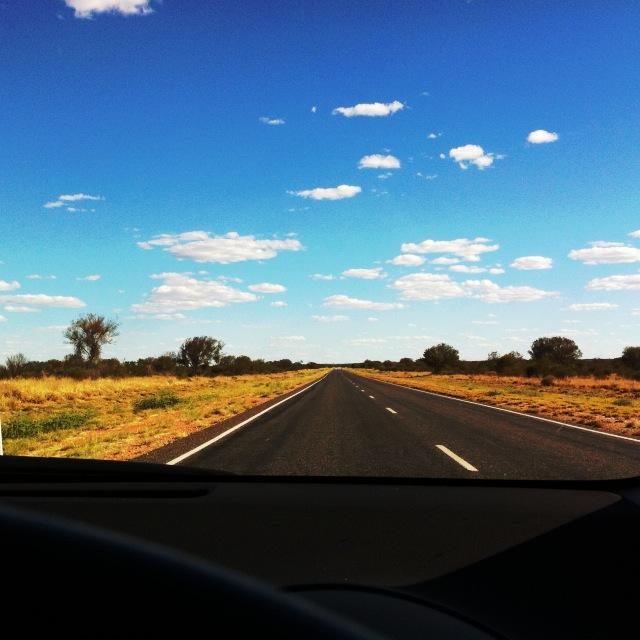
One of my own photos from my years out there.
What there is to do
Beyond the sunrise and sunset viewing areas, the things worth your time are:
- The Uluru base walk — a flat loop right around the rock (around 10 km). Walking around it, close up, tells you far more than any photo from the car park.
- Kata Tjuṯa (the Olgas) — the domed rock formations a short drive away, with their own walks. Many people who go rate them as highly as Uluru itself.
- The Cultural Centre — go. Really. It helps you understand the Anangu, the traditional owners — maybe not to feel exactly as they do, but to understand why they live the way they do, and why this place matters so much.
- Field of Light and stargazing experiences — the desert dark is the whole draw, and there are organised ways to make the most of it.
Respect the rock — the climb is closed now
You cannot climb Uluru, and you shouldn't want to. When I lived there you still could, and plenty of people did — but it was permanently closed in 2019 at the request of the Anangu, and honestly, that's exactly how it should be. This is somebody's sacred place. You don't have to fully understand it, and you may never feel it the way they do, but you respect it — the same way you'd behave in any place that's holy to other people. Whatever the guides and signs ask you not to do, don't do it. That's the whole of it.
The honest bit about being there
I'll be truthful about living out there, because it shaped how I'd tell you to visit. At the time it often felt suffocating — isolated, hard, a bit like being stuck. It was only after I left that I realised it had actually been a kind of heaven, and I found myself regretting that I hadn't done more with all the quiet hours I had outside of work. There isn't some grand attraction out there ticking away. What there is, is a feeling you can only get in that exact place — the space, the silence, that sky — and it rewards people who lean into it rather than fight it.
For a visitor, that's actually good news: you're only there a few days, so the isolation that wore me down over years is, for you, just a couple of nights of mild inconvenience in exchange for a sky you'll remember for the rest of your life. Bring the right shoes and the fly net, respect the place, look up after dark — and let it be what it is.
The town you never see
Here's something almost no visitor realises: on the far side of the hotels, out of sight, there's a whole town where the staff live. It's a proper little community — shared apartments for general staff, studio units for supervisors, two- and three-bedroom houses for the families, a school (up to about year seven), a police station, a medical centre, even a fire station. There's a members' club, a bit like an RSL, with a gym, a pool and a bar, so there was always something to do after a shift — and the parties out there were frequent and, let's say, memorable. Rooms were cheap, and the remote-area perks meant the money worked out better than it looked on paper. So when someone brings you a drink at the sunset viewing, remember they've probably clocked off and walked home to a hidden desert town you'll never see. That, quietly, is part of what makes the place extraordinary.
Getting there & staying
Everyone stays at the resort town of Yulara (Ayers Rock Resort) — a cluster of hotels and campgrounds just outside the national park, since there's nowhere else out there. It's more self-contained than people expect: there's an IGA supermarket, so food, water and basics are genuinely fine. What there isn't is anything like a Kmart or a big shop — for that, it's a five-hour drive to Alice Springs, so bring anything specific you'll need. Most people fly into the small Ayers Rock (Connellan) Airport rather than driving the long distances. Treat it as a focused few-day trip, not somewhere to wing it.
Go deeper
Questions
Can you climb Uluru?
No. Climbing Uluru was permanently closed in 2019 at the request of the Anangu, its traditional owners, out of respect for its sacred significance. Visit it, walk around its base, and photograph it — but the climb is rightly off-limits, and that's how it should stay.
Is Uluru just sand dunes like the Sahara?
No — that's the biggest misconception. The Red Centre is deep-red earth covered in low scrub and trees, full of wildlife (mice, lizards, scorpions and snakes). If you're picturing empty golden dunes, you'll be surprised. It's a living desert, not a sand sea.
When is the best time to visit Uluru?
The cooler months (roughly the Australian autumn to spring, around May to September) are far more comfortable — summer brings oven-like heat and clouds of flies. Remember that nights are cold year-round, sometimes with a 30°C-plus day-to-night swing, so always pack a warm layer.
What should I pack for Uluru?
Closed shoes (not thongs — the ground gets hot enough to melt them), a hat with a fly net, strong sun protection, plenty of water, and a proper warm layer for the cold nights. Those few things make the difference between a great trip and a miserable one.
How do you get to Uluru, and where do you stay?
Most people fly into the small Ayers Rock (Connellan) Airport; the alternative is a long drive (Alice Springs is about five hours away). Everyone stays at Yulara / Ayers Rock Resort just outside the park, which has hotels, campgrounds and an IGA supermarket for supplies.
Is the wildlife dangerous?
There are venomous snakes, scorpions and dingoes, so use common sense: wear closed shoes, watch where you step, don't feed or approach dingoes (a lone one is usually just passing; a group warrants care), and keep food secured. Treated sensibly, it's part of what makes the place special rather than something to fear.
This guide is written from my own three years living and working at the Uluru resort; note that when I was there the climb was still open, whereas it has since been permanently and rightly closed. Conditions, wildlife and services change — always follow current park advice, signage and the wishes of the Anangu traditional owners, and check the latest information before you travel. Uluru is a sacred site; please visit with respect.