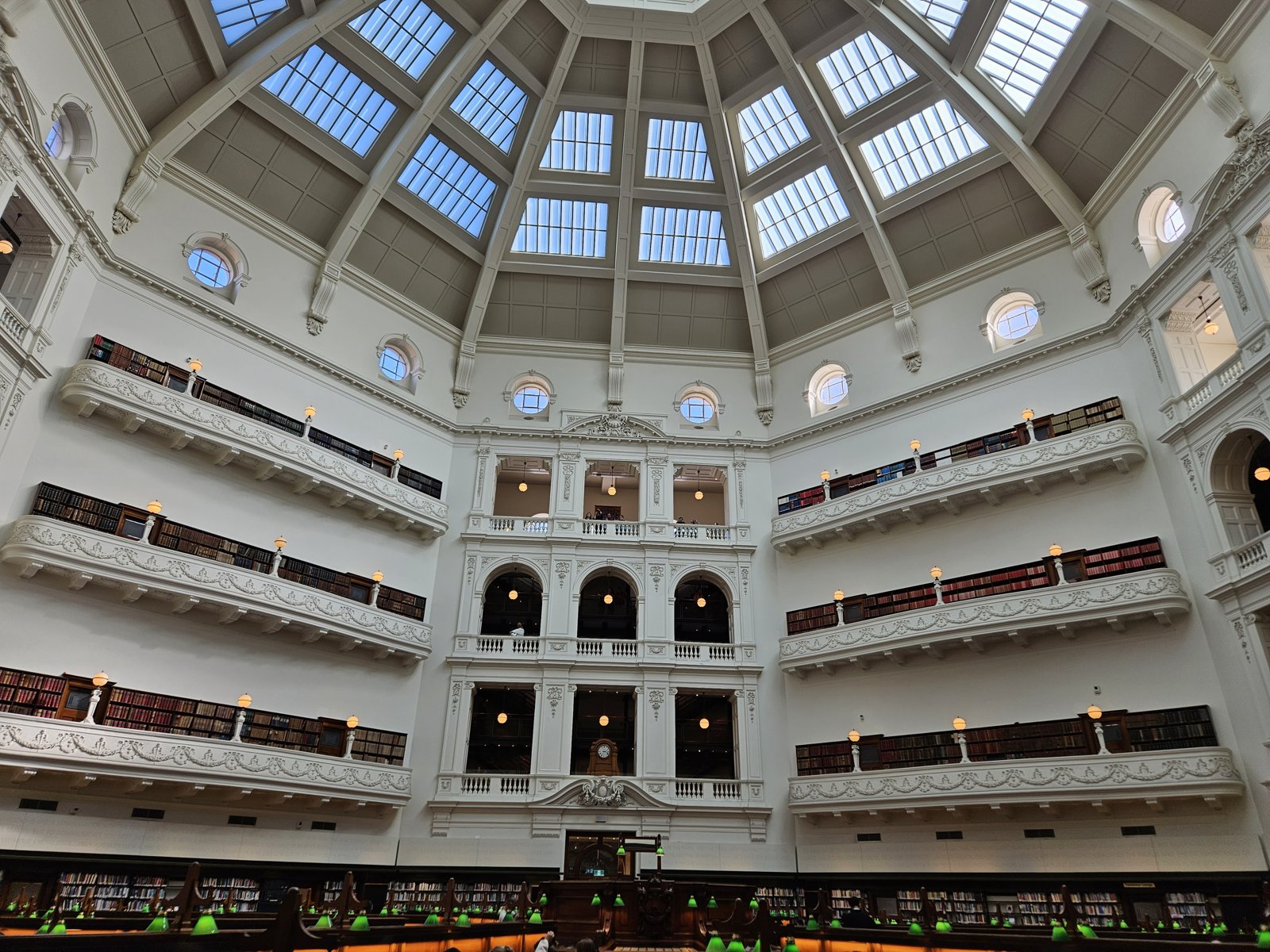
The State Library of Victoria's reading room — one of the genuinely stunning bits of the city. (My own photo.)
Let me be honest from the start, because a guide that only gushes isn't much use: Melbourne isn't my favourite Australian city. The weather wears on me, parts of it feel gritty rather than pretty, and it can be an expensive place to eat. But it's also one of the most genuinely multicultural, culture-rich cities in the country, and if what you love is food, coffee, art and old architecture, you may well feel the opposite of me. Here's the fair version of both.
The most multicultural city in Australia
Melbourne is an old city by Australian standards, and above all an immigrant one — walk around and you'll hear a dozen languages and see communities from all over the world. What's interesting is how those communities have held onto their cultures rather than blending away, so the city is a patchwork of distinct neighbourhoods, each with its own food, shops and feel. It's genuinely fascinating. It's also, to my eye, a bit rough around the edges in places — grittier and less polished than a first-timer might expect. Some people love exactly that texture; I found it a little much. Fair warning, so you arrive with the right expectations.
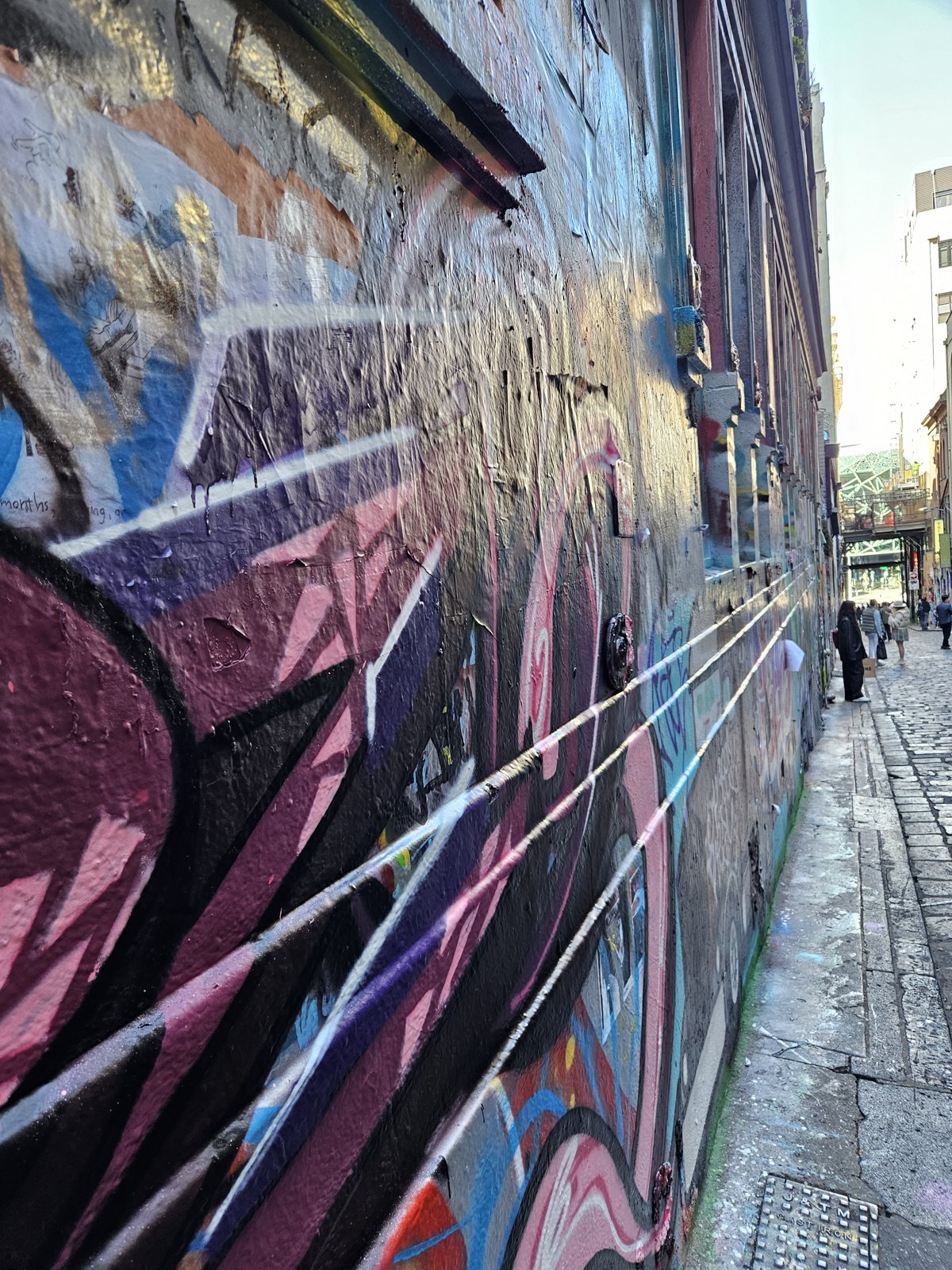
A street-art laneway in the city centre — the walls change constantly. (My own photo.)
The hook turn will get you — so don't drive in the city
This is the single most useful thing I can tell you. Driving in central Melbourne is genuinely stressful, because the trams share the road with cars, running right down the middle of many streets. And Melbourne has a quirk you'll find nowhere else in Australia: the hook turn. At certain city intersections, to turn right you have to wait in the left lane, pull forward into the intersection, and complete the turn once the lights change — all to keep the tram tracks clear. If you don't know it's coming, you'll line up to turn right the normal way and suddenly find a tram bearing down on you.
Coffee: skip the $40 cup
Melbourne's coffee reputation is real, but here's my honest take on where to find the good stuff. The best coffee I had wasn't in the famous, buzzy spots — it was in tiny neighbourhood cafés, away from the centre, made by people who just care. Meanwhile you'll also find "specialty" single-origin coffees at genuinely eye-watering prices; I've seen $30–40 for a single cup. Could be a fun one-off if you're curious, but honestly it felt more like paying for the vibe and the story than for a better-tasting coffee. Walk into a busy little local café, order a flat white, and you'll do far better for a fraction of the price.
Food: excellent, but mind the surcharges
Food is where Melbourne earns its stripes. As a big, diverse city it has an enormous range and the quality is reliably above average — you can eat your way around the world here:
- Lygon Street, Carlton — the historic Italian strip, for pasta, pizza and gelato.
- Victoria Street, Richmond — the Vietnamese heartland; go here for a proper bowl of pho.
- Chinatown & the CBD lanes — dumplings, hotpot and late-night noodles.
- Queen Victoria Market — a huge, historic market for produce and cheap eats.
One thing to budget for, because it surprised me: weekend and public-holiday surcharges. It's normal here for cafés and restaurants to add a percentage on Saturdays, a bit more on Sundays, and more again on public holidays — it should be printed on the menu, so check before you order. It's legitimate, but it does make eating out feel pricey, especially on a weekend.
What I actually loved: the culture
Here's the side of Melbourne I'd happily go back for. The State Library of Victoria is genuinely famous — its grand domed reading room is worth stepping into even if you're not a reader; go once. I loved the museums, which are among the best in the country. And St Paul's Cathedral — the bluestone Gothic one right opposite Flinders Street Station, in the thick of the city — was one of my favourite spots: beautiful, calm, and free to step into for a quiet moment amid the bustle. (St Patrick's, a little further east, is the other grand one.) If you're into art, design, fashion or simply watching an endlessly varied crowd go by, Melbourne is one of the best cities in Australia for it.
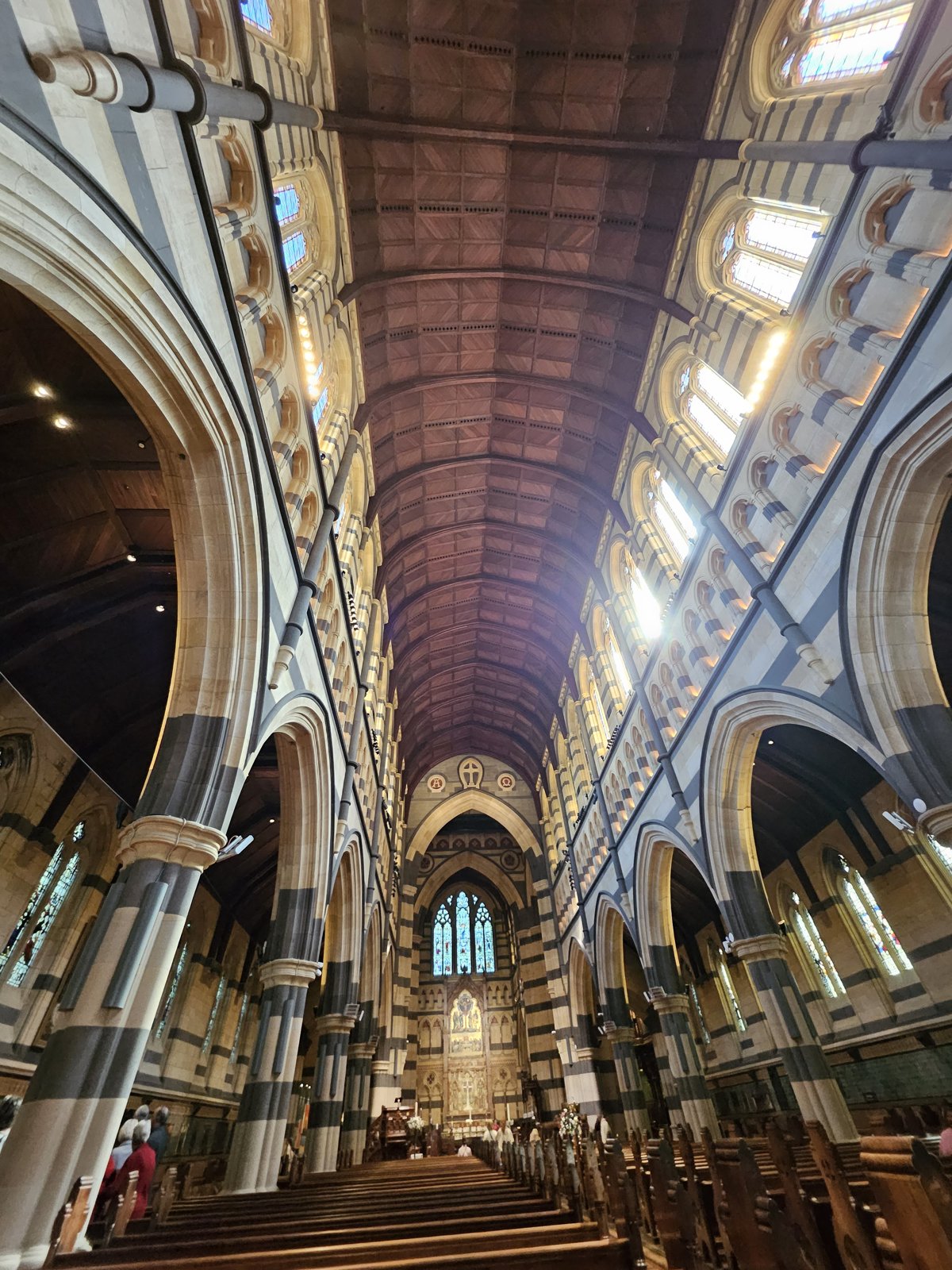
Inside St Paul's Cathedral, opposite Flinders Street Station — my quiet spot in the city. (My own photo.)
Melbourne isn't a postcard. It's a city with layers — and the good layers are cultural, not scenic.
Who Melbourne is really for
Be honest with yourself about what you want. If you love art, museums, coffee, world food, old architecture and people-watching, Melbourne is arguably the best city in Australia for you, and you'll forgive its grey days. If you're chasing beaches, sunshine and polished good looks, you may find it underwhelming — Sydney or the Queensland coast might suit you more. Neither is wrong; it's just about matching the city to the trip you actually want.
Getting around & the weather
Getting around is easy without a car. The central city is a Free Tram Zone, so trams around the CBD cost nothing; beyond it, get a myki card and tap on and off. The grid is flat and walkable. As for weather — the local joke about "four seasons in one day" is real, so pack layers and a compact rain jacket whatever the season, and don't build your plans around the forecast, because it'll change its mind anyway.
The day trips
Some of the region's best experiences are a drive out of the city (on a tour, so you skip the hook turn):
- The Great Ocean Road — the coastal drive to the Twelve Apostles. A long but classic day.
- Phillip Island — the nightly penguin parade at dusk.
- The Yarra Valley — wineries and long lunches for food-and-wine lovers.
Affiliate link — we may earn a commission
Go deeper
Questions
Is Melbourne worth visiting?
It depends what you want. If you love coffee, world food, art, museums and old architecture, Melbourne is arguably Australia's best city for it. If you're after beaches, sunshine and polish, you may find it underwhelming — I'm personally more mixed on it, but plenty of people adore it. Match it to the trip you want.
What is a hook turn in Melbourne?
It's a driving rule unique to central Melbourne: at certain intersections you turn right from the left lane, pulling into the intersection and completing the turn when the lights change, to keep the tram tracks clear. It catches visitors out constantly — which is a big reason to avoid driving in the CBD and use trams instead.
Why is eating out in Melbourne expensive?
The food is great and varied, but weekend and public-holiday surcharges are standard — cafés and restaurants commonly add a percentage on Saturdays, more on Sundays and more again on public holidays. It's disclosed on the menu, so check before ordering, especially on weekends.
Where's the best coffee in Melbourne?
In my experience, the small neighbourhood cafés away from the tourist centre, not the famous buzzy spots. Order a flat white from any busy local café and you'll do well. The very expensive "specialty" cups (I've seen $30–40) are more about the experience than a better taste.
How do you get around Melbourne?
Don't drive in the city if you can help it. The central Free Tram Zone means CBD trams are free, the grid is flat and walkable, and a myki card covers trams beyond the zone. Between walking and trams you can see the city cheaply and skip the hook turn entirely.
What's actually worth seeing?
The State Library of Victoria (step into the domed reading room), the city's museums, St Paul's Cathedral opposite Flinders Street Station, the laneways and street art, and the food streets — Lygon (Italian), Victoria Street (Vietnamese), Chinatown and Queen Victoria Market. Add a day trip like the Great Ocean Road.
This guide reflects my own honest impressions of Melbourne plus current details cross-checked since — it's general information, not a live listings guide, and my opinion is just that. Venues, tour operators, surcharges and prices change often, so check current information and prices for your dates before you go, and always follow local road rules if you do drive.