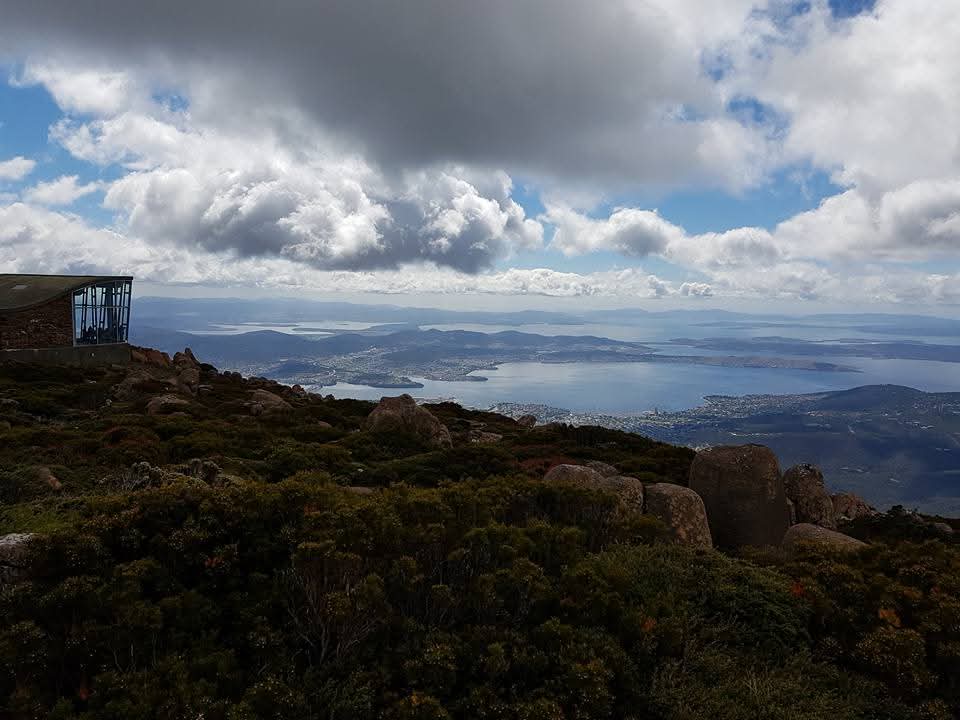
The whole city, the river and the sea laid out below you from the top of Mount Wellington — and the wind trying to push you off the edge. (My own photo.)
The thing I remember most about Hobart isn't in the city at all — it's the view from the top of Mount Wellington, with the whole of Hobart, the river and the sea spread out below in one sweep. It's genuinely one of the best views I've seen in Australia. Getting up there, though, is another story, and it tells you a lot about Tasmania: beautiful, wild, and not to be underestimated.
Mount Wellington: incredible view, hair-raising drive
The summit of kunanyi / Mount Wellington looms right over Hobart, and the lookout at the top is spectacular — the entire city and the water laid out beneath you. Two warnings, though, from someone who did it. First, the wind: it is fierce up there, and much colder than in the city; dress far warmer than you think you need. Second, and more seriously, the drive. The road up hugs the edge with sheer drops right beside you, often with no guardrail, and there are plenty of stretches too narrow for two cars to pass. I'll be honest — it had me gripping the wheel the whole way. We passed a couple walking up, and I just about saluted them; it did not look like a stroll.
What Hobart actually feels like
Down in the city, Hobart surprised me in a good way. It's old — one of Australia's oldest cities — but it's old in a tidy, well-kept way, not the busy, slightly grubby old of inner Melbourne. Think orderly sandstone streets and a calm, small-town feel rather than a big-city buzz. Honestly, it reminded me more of the New Zealand countryside than of a mainland Australian city: quiet, green, unhurried and neatly kept. If that sounds appealing, you'll like Hobart; if you want nightlife and crowds, this isn't the place.
One more honest note: it's cold. Tasmania sits far to the south, and even when it wasn't winter we felt the chill — bring layers whatever the season. And the coffee? I'd hoped for Melbourne-level, given the cool, café-ish feel, but for me it didn't quite live up to that. Set your expectations at "fine," not "great," and you won't be disappointed.
Hobart is old, but it's the tidy, well-kept kind of old — more New Zealand village than big Australian city.
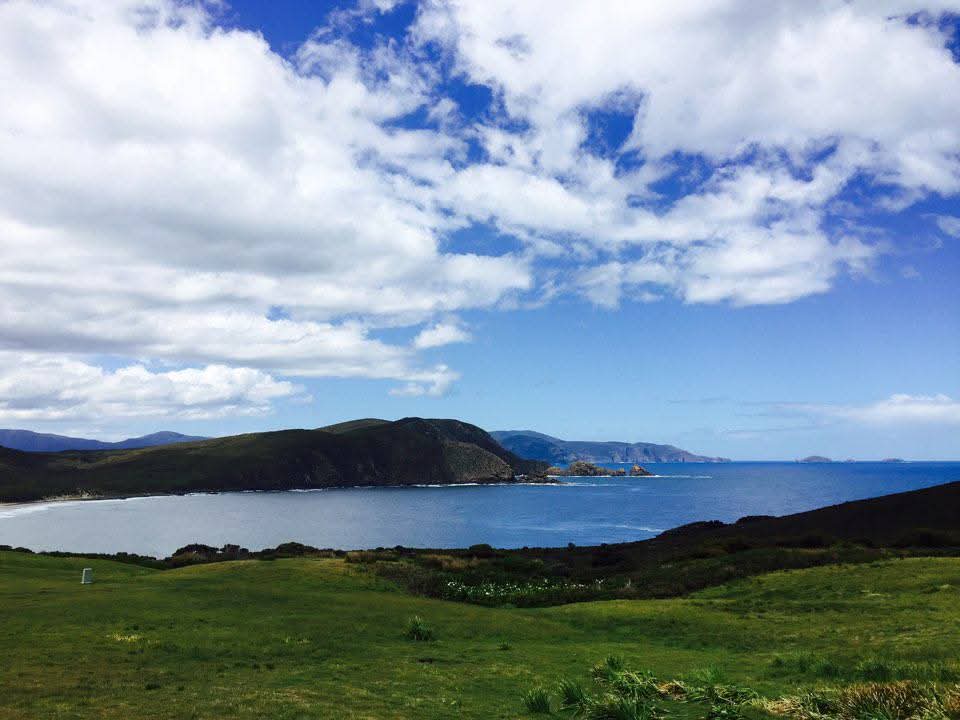
The wild, green Tasmanian coast — this is the scenery that wins people over. (My own photo.)
The convict history is the other reason to come
Tasmania's convict past is written all over this corner of the state, and it's sobering and fascinating in equal measure. The big one is Port Arthur, the remarkably preserved convict penal settlement about an hour and a half southeast of Hobart — a World Heritage site and a genuinely moving place to walk around, heavy with history rather than gloss.
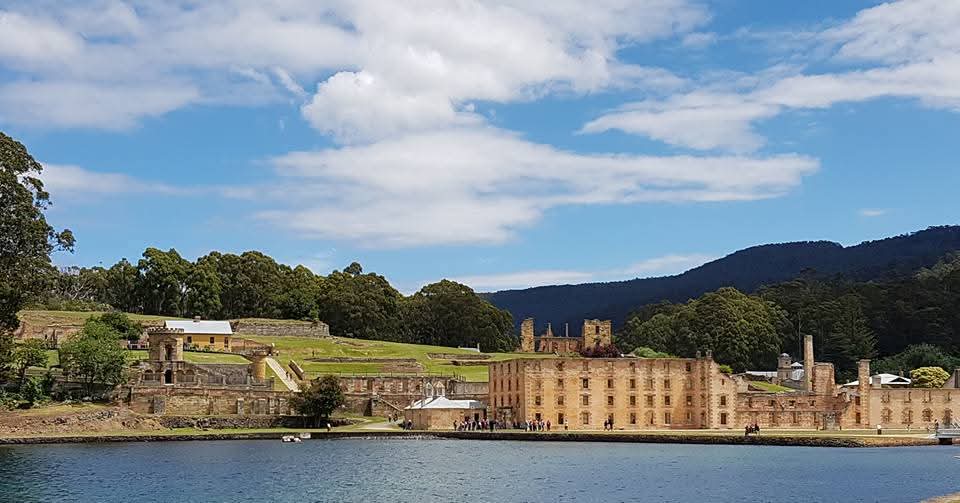
Port Arthur, the preserved convict settlement southeast of Hobart. (My own photo.)
On the way there, don't miss the lookout at Eaglehawk Neck — the extraordinary spot where the land narrows to a thin sliver with sea on both sides. Standing there with water either side of a single strip of road stuck with me; the same neck was once guarded to stop convicts escaping the peninsula. The whole drive down that way, with its coastal lookouts, is worth the day.
The two things Hobart is most famous for
Beyond my own wanderings, two things draw most visitors to Hobart, and they're worth knowing about even if, like me, the mountain and the history were the highlights:
- Salamanca Market — the big Saturday market in the historic sandstone warehouses of Salamanca Place, full of Tasmanian produce, crafts and food. If your trip includes a Saturday, go.
- MONA (Museum of Old and New Art) — the famous, provocative private art museum north of the city, most enjoyably reached by ferry up the river. It's a love-it-or-hate-it place, but it's put Hobart on the map.
Affiliate link — we may earn a commission
Who Hobart is for
Match it to what you want. If you love nature, history, big views, cool-climate calm and old-world tidiness, Hobart is a gem, and Tasmania around it is even better. If you're after warmth, buzz, nightlife or a fast-moving city, you'll find it sleepy and chilly. For me it was the mountain, the convict history and that New-Zealand-village calm that made it worth the trip — just pack warm and drive that mountain road with respect.
Go deeper
Questions
Is Hobart worth visiting?
Yes, if you like nature, history and a calm, old-world city over big-city buzz. The view from Mount Wellington and the convict history (especially Port Arthur) are the highlights, wrapped in a tidy, quiet town that reminded me of the New Zealand countryside. It's sleepy and cold, though — go in knowing that.
Can you drive up Mount Wellington?
Yes, a sealed road goes to the summit lookout, but take it seriously: it's steep and narrow with sheer drops and often no guardrail, and stretches are too tight for two cars. Drive slowly, check conditions (it can close for snow or ice even outside winter), and dress very warmly — it's fierce and freezing at the top. Tour vans go up too if you'd rather not drive.
What is there to do in Hobart?
The big draws are the Mount Wellington summit view, the convict history at Port Arthur (about 90 minutes away, with the striking Eaglehawk Neck lookout on the way), Salamanca Market on Saturdays, and MONA art museum by ferry. Tasmania's food, wine and wild scenery reward extra days.
Is Hobart cold?
Yes — Tasmania is Australia's southernmost state and Hobart feels cold and changeable even outside winter. Pack proper layers and a windproof jacket in any season, and expect it to be much colder and windier on top of Mount Wellington than in the city.
How far is Port Arthur from Hobart?
Roughly 90 minutes' drive southeast, on the Tasman Peninsula. It's an easy day trip, and the coastal route takes you past the narrow isthmus at Eaglehawk Neck and its lookouts. Allow a good chunk of the day to do Port Arthur properly.
This guide is from my own trip to Hobart, with current details cross-checked since — it's general information, not a live listings guide. Roads, opening hours, tours and prices change, and mountain conditions vary, so always check current information, road status and the weather before you go, and drive to the conditions.