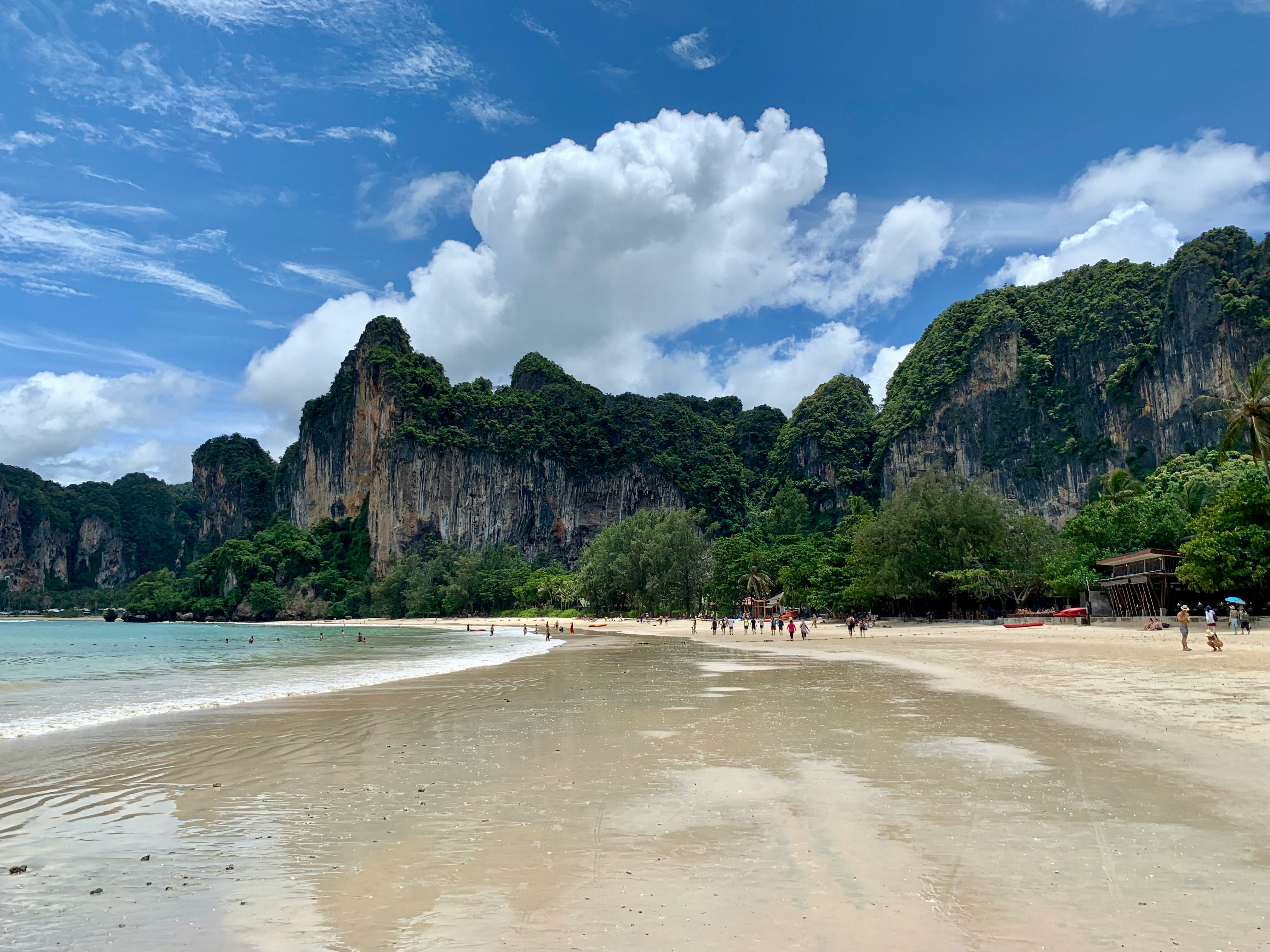
Railay sits on the mainland, but cliffs cut off the roads — so it feels, and travels, like an island.
Railay is one of those places that looks photoshopped and isn't. It's technically part of the Thai mainland in Krabi province, but sheer limestone cliffs wall it off from any road, so the only way in is a ten-minute longtail boat ride across the bay. That single fact — no cars, no scooters, no through-traffic — is what makes it feel like a different, slower country the moment you step off the boat onto the sand.
It's also a place people routinely get wrong. They come for a half-day from Ao Nang, fight the midday crowds on the busiest stretch of beach, and leave thinking "nice, but overrated." The travellers who love Railay are almost always the ones who stayed — who were still there after the day-trip boats had gone and the cliffs turned gold. This guide is written for that second group.
First, get the geography right
"Railay Beach" is really four small beaches on one little peninsula, each with a completely different personality. Knowing which is which is the single most useful thing before you book, because where you stay decides what your trip feels like.
Railay West — the postcard
The wide, soft, sunset-facing beach everyone pictures. It's where the nicer resorts sit and where the day boats unload, so it's gorgeous and busy by day, then quiet and golden in the evening once the crowds leave. Stay here if you want the classic beach and don't mind paying for it.
Railay East — the practical side
Mangroves rather than swimming sand, and a working boat jetty. It's not a beach you'll laze on, but it's cheaper, has most of the budget guesthouses, bars and cheap eats, and you can walk to Railay West in five minutes. Stay here to save money and still be in the middle of everything.
Phra Nang Cave Beach — the stunner
A short walk through the peninsula brings you out at Phra Nang, regularly called one of the most beautiful beaches in Thailand — turquoise water, a cave shrine at one end, climbers on the cliffs above. There's no accommodation here (only one ultra-luxury resort owns the headland), so everyone visits and nobody stays. Go early or late to have it closer to yourself.
Tonsai — the climbers' hideout
Around the headland, scruffier, cheaper, and beloved by rock climbers and long-stay backpackers. Reachable by boat or, at low tide, a scramble over the rocks from Railay West. Stay here if your budget is tight and you want the laid-back, barefoot end of the scale.
The mistake isn't picking the "wrong" beach. It's not realising they're different beaches at all.
Where to stay, by budget
Railay covers a genuinely wide range, which is part of its charm — a flashpacker and a honeymooner can both have a good week here. As a rough sense of what to expect (always check live prices for your dates, as they swing hard with season):
- Tight budget — basic fan or aircon rooms and bungalows on Railay East and Tonsai. The cheapest, most social, closest to the backpacker scene.
- Mid-range — comfortable aircon resorts a short walk from the sand, often with a pool. The sweet spot for most couples and families.
- Splurge — the handful of beachfront and headland resorts on Railay West and Phra Nang, where you pay a real premium for the location and the calm after the day boats go.
Because there are no roads, everything — including your bags — comes in by boat, and supplies are carried in. That's the quiet reason food and drinks cost a bit more than on the mainland, and why staying a few nights (rather than day-tripping) is what justifies the trip.
Getting there (it's easier than it sounds)
Fly into Krabi (KBV), the closest airport. From there it's a short transfer to Ao Nang, the mainland beach town, and from Ao Nang a shared longtail boat runs across to Railay whenever it fills up — about ten minutes on the water. You can also catch a longtail from Krabi Town. Boats beach themselves on the sand, so expect to wade the last few steps; pack accordingly and keep anything that hates seawater in a dry bag.
One practical catch worth knowing: longtails are tide- and weather-dependent. In the wet season or rough seas, crossings can pause, and at very low tide boats may use a different beach. Build a little slack into your arrival and departure days rather than booking a tight onward connection.
When to go
The dry season, roughly November to April, is the reliable window — calm seas, sunny days, easy boat crossings, and also the busiest, priciest stretch. The shoulder months at each end of that window are the value sweet spot: still mostly good weather, fewer crowds, softer prices. The wet season (roughly May to October) is cheaper and greener but brings real rain and choppier, less predictable boat days.
What to actually do
- Rock climbing — Railay is one of the world's famous climbing spots, and the cliffs have routes for total beginners. A half-day intro course with a guide is the classic first-timer experience.
- Phra Nang Cave Beach — go at the edges of the day for that beauty without the crowd, and see the cave shrine at the end.
- The viewpoint and lagoon — a steep, muddy, rope-assisted scramble up from Railay East rewards you with a cliff-top view (and, for the brave, a hidden lagoon further down). Wear real shoes, not flip-flops.
- Island-hopping — longtail tours run out to nearby islands and snorkelling spots; pre-booking lets you compare what's included rather than haggling on the sand.
Honest tips that save the trip
- Stay at least two nights. The whole point is the quiet after the day boats leave. A day trip shows you the crowd, not the magic.
- Bring cash. ATMs are scarce and small businesses prefer cash; sort it on the mainland before you cross.
- Pick your beach on purpose. Re-read the four beaches above and match it to your trip — quiet luxury, cheap and social, or barefoot climber.
- Respect the tides and weather for boat days, and don't schedule a same-day tight flight connection out.
None of this is exotic once you know it — and that's rather the point. Railay rewards a little planning more than almost anywhere, because the no-roads thing means you can't just fix a mistake by hopping in a taxi. Get the beach and the timing right, and it's as good as the photos. Get them wrong and you'll be one of the people calling it overrated.
Go deeper
Questions
Is Railay Beach worth visiting?
Yes — if you stay overnight rather than day-tripping. The scenery is genuinely world-class, and the no-roads calm after the day boats leave is what people fall for. Visitors who only come for a few midday hours often leave underwhelmed by the crowds.
Which Railay beach should I stay on?
Railay West for the classic beach and nicer resorts; Railay East to save money and stay central (it's mangrove, not swimming sand, but five minutes' walk from West); Tonsai for the cheapest, most laid-back climber scene. Phra Nang is for visiting, not staying.
How do you get to Railay?
Fly to Krabi airport, transfer to Ao Nang (or Krabi Town), then take a shared longtail boat across — about ten minutes. There are no roads in, so everything arrives by boat, and crossings depend on tide and weather.
When is the best time to go?
The dry season, roughly November to April, for calm seas and reliable boats — busiest and priciest too. The shoulder months at either end usually offer the best balance of decent weather, fewer people and lower prices.
Do I need to book accommodation in advance?
In peak season, yes — Railay is small and the best-value places fill up. Booking ahead also means your boat arrival is sorted rather than hunting for a room with your bags on the sand.
This guide is researched and cross-checked rather than a personal trip report, and is general information only. Costs are given as rough bands because they vary with season, operator and exchange rates — always check current prices, boat conditions and any travel advisories for your dates before booking.