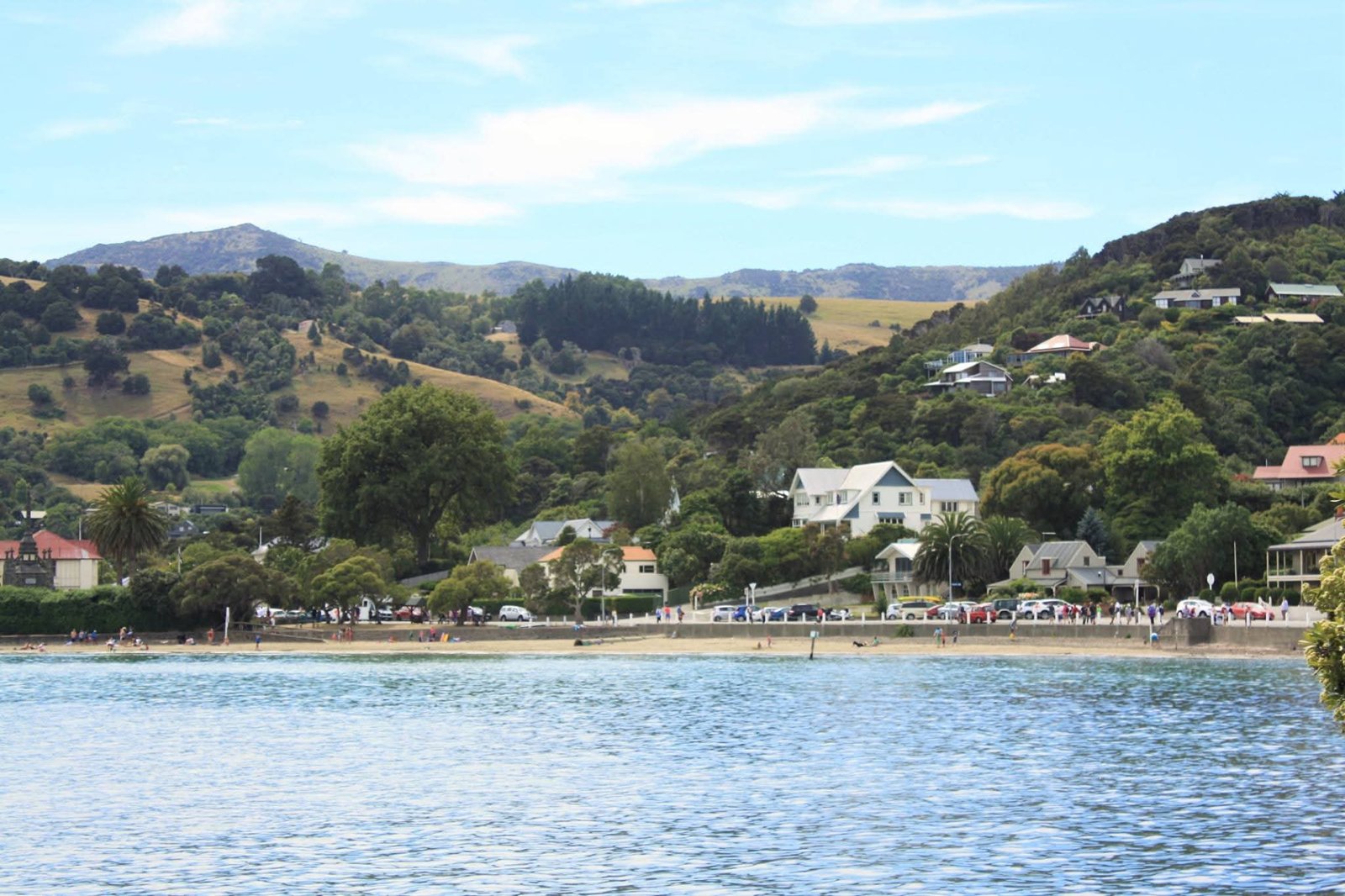
Akaroa, one of our South Island cruise stops — the tidy, green, small-town New Zealand I love. (My own photo.)
New Zealand is one of those places where the scenery does most of the talking, and I've been lucky enough to see it two ways that couldn't be more different. The first was a cruise that started in Auckland and worked its way all the way around the country to the far south. The second was a land trip based in Rotorua, the town that bubbles and steams and smells of sulphur. If you're weighing up how to see New Zealand, here's what each is really like.
Seeing New Zealand by cruise
Cruising New Zealand is a lovely way to get the big picture without living out of a suitcase or driving for hours between stops. You unpack once, and the country comes to you — you wake up somewhere new most mornings. Ours began in Auckland and looped down and around, calling at a string of ports and, best of all, cruising right into the scenery at the bottom.
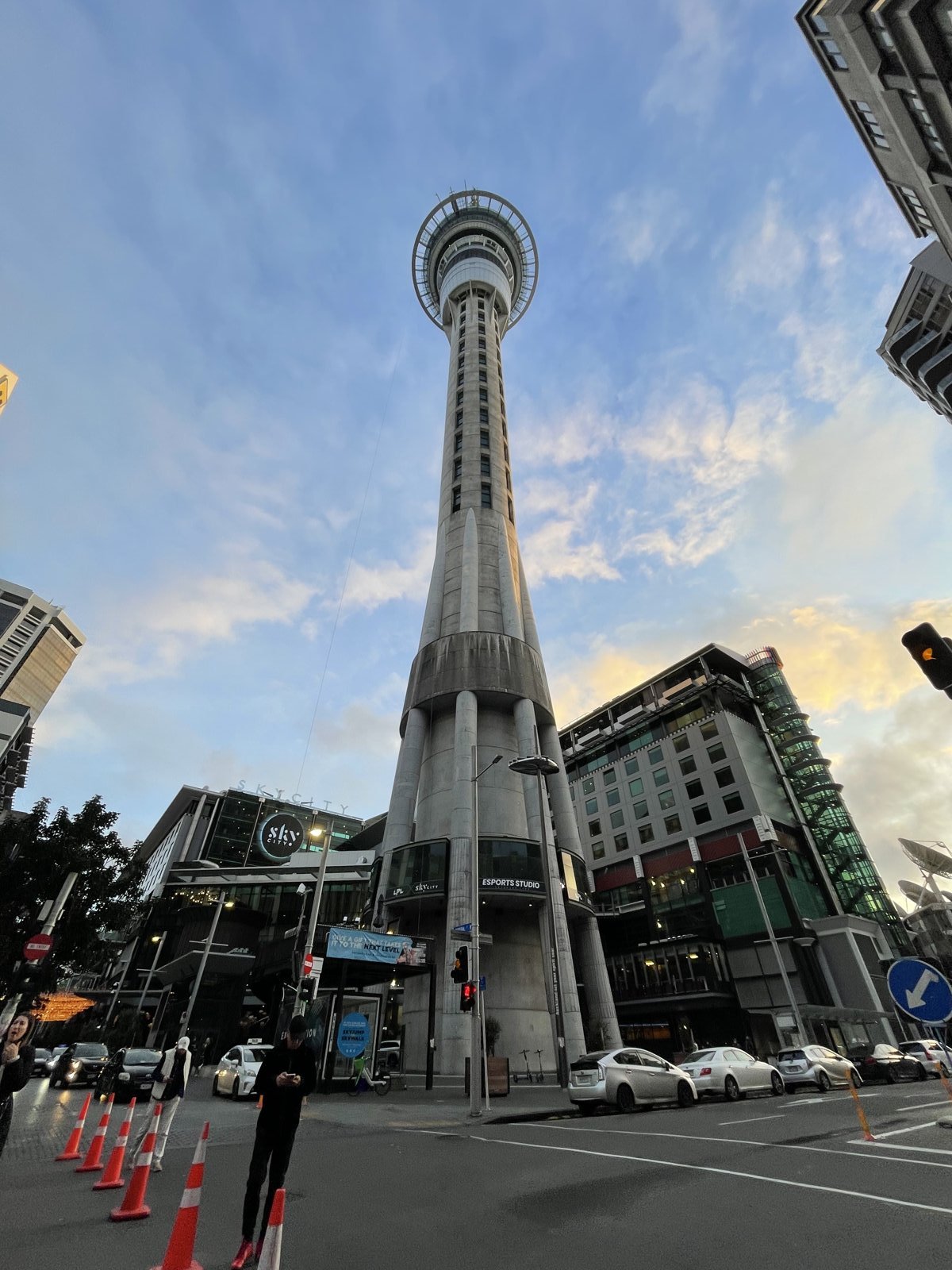
Auckland's Sky Tower, where our loop began — the big city before the country opens up. (My own photo.)
A typical loop like ours takes in places such as the Bay of Islands in the north, Auckland, Tauranga (the gateway to Rotorua), art-deco Napier and the capital Wellington on the North Island; then across to the South Island for Picton and the Marlborough Sounds, Akaroa near Christchurch, and Dunedin in the deep south. The undisputed highlight, though, is the scenic cruising through the fiords down in Fiordland — gliding through steep, misty, waterfall-streaked sounds with the whole ship out on deck. That part alone is worth the trip.
Honest trade-offs, though. A cruise gives you a taste of each place, not a deep visit — you get a day, sometimes less, in port. And the further south you go, the more the seas and weather can turn, so pack for cold and bring something for motion if you're prone to it. Think of a cruise as a brilliant overview that shows you where you'd like to come back and stay longer.
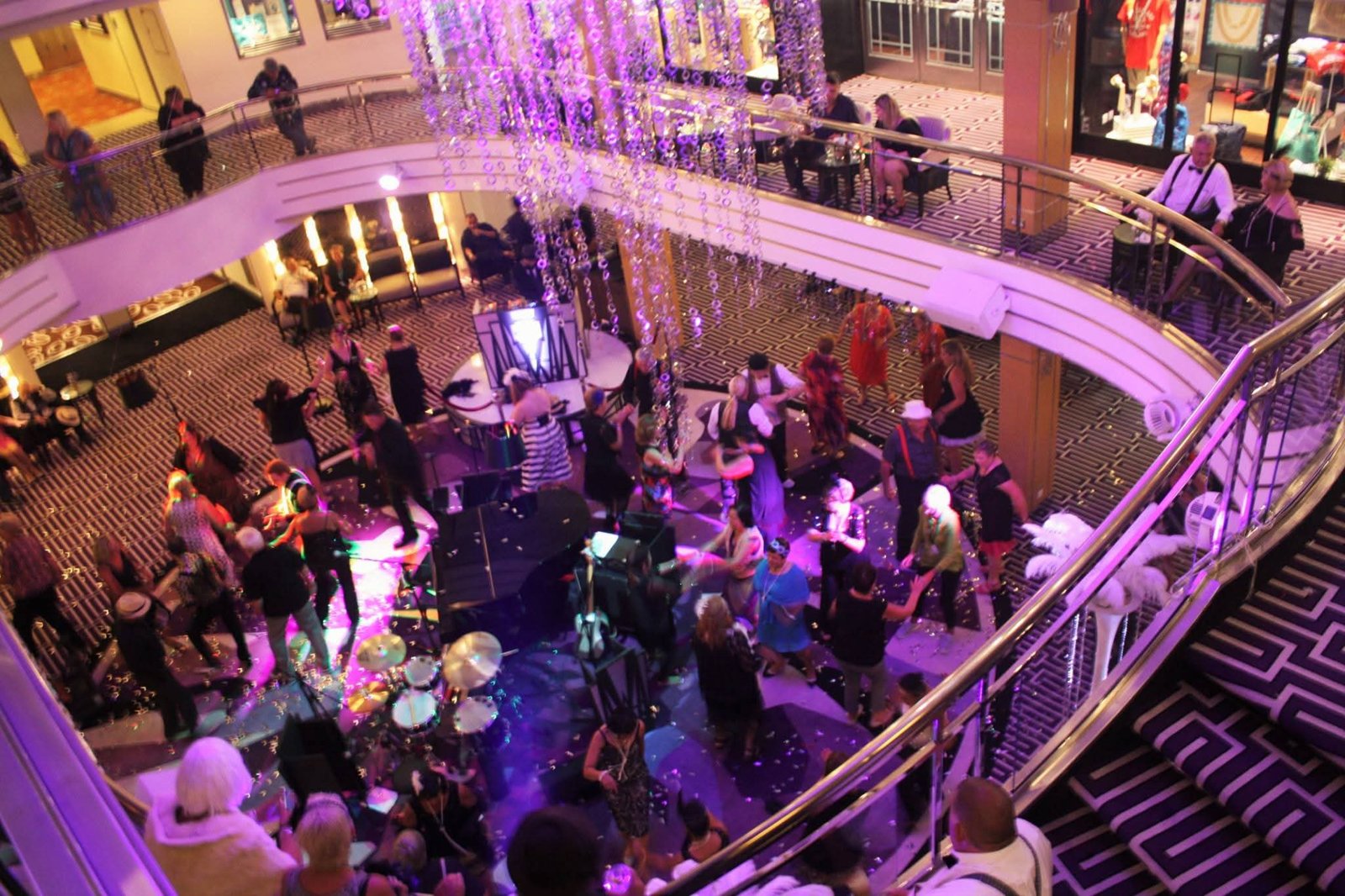
Ship life has its own fun between ports — a themed evening on board on our loop around the country. (My own photo.)
A cruise shows you the whole of New Zealand at a glance — and the fiords from the deck are the moment you'll remember.
Rotorua: the city that steams
Rotorua is completely different, and I loved it for exactly that. It sits on top of one of the most active geothermal areas in the country, and you know it the moment you arrive: the smell of sulphur — yes, rotten eggs — hangs in the air. It's strong at first, and then, oddly, you stop noticing it. What you're smelling is a landscape that's genuinely alive: bubbling mud pools, steaming vents, hot springs and geysers right there in and around the town.
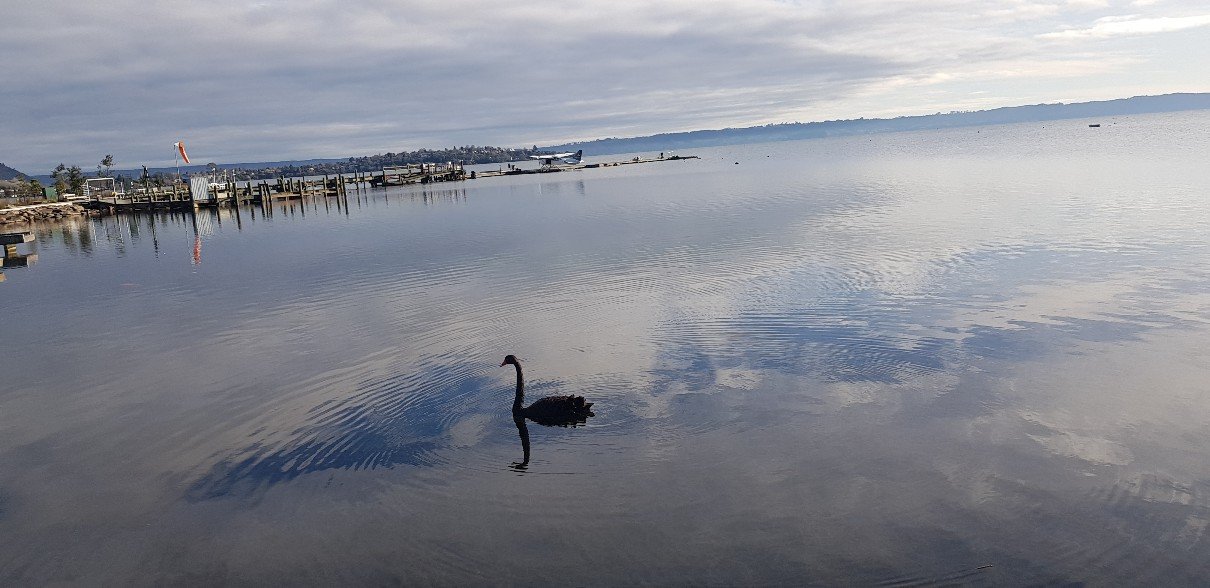
A still morning on Lake Rotorua — a black swan and a floatplane, a short walk from all that steam. (My own photo.)
It's also a heartland of Māori culture, and one of the best places in the country to experience it — cultural performances, and the traditional hāngī feast cooked in the heat of the earth itself. Between the steam, the thermal pools you can soak in, and the culture, Rotorua packs a lot into a small, walkable place. It leans touristy, sure, but the geothermal wonders are the real thing, not a show.
A day in the Shire: Hobbiton
While I was based in the Rotorua area I couldn't not go to Hobbiton — the Lord of the Rings and Hobbit movie set, out in the green farmland near Matamata, an easy day trip. I'll be honest, I'm not a die-hard fan of the films, and I still found it charming. The little round doors set into the rolling hills, the tiny gardens, the washing lines and the "No admittance except on party business" sign — it's all lovingly kept, and it sits in exactly the kind of impossibly green, tidy countryside that made them film here in the first place. Even if the movies aren't your thing, it's a lovely walk through a very New Zealand landscape, and a nice, gentle contrast to the sulphur and steam back in Rotorua.
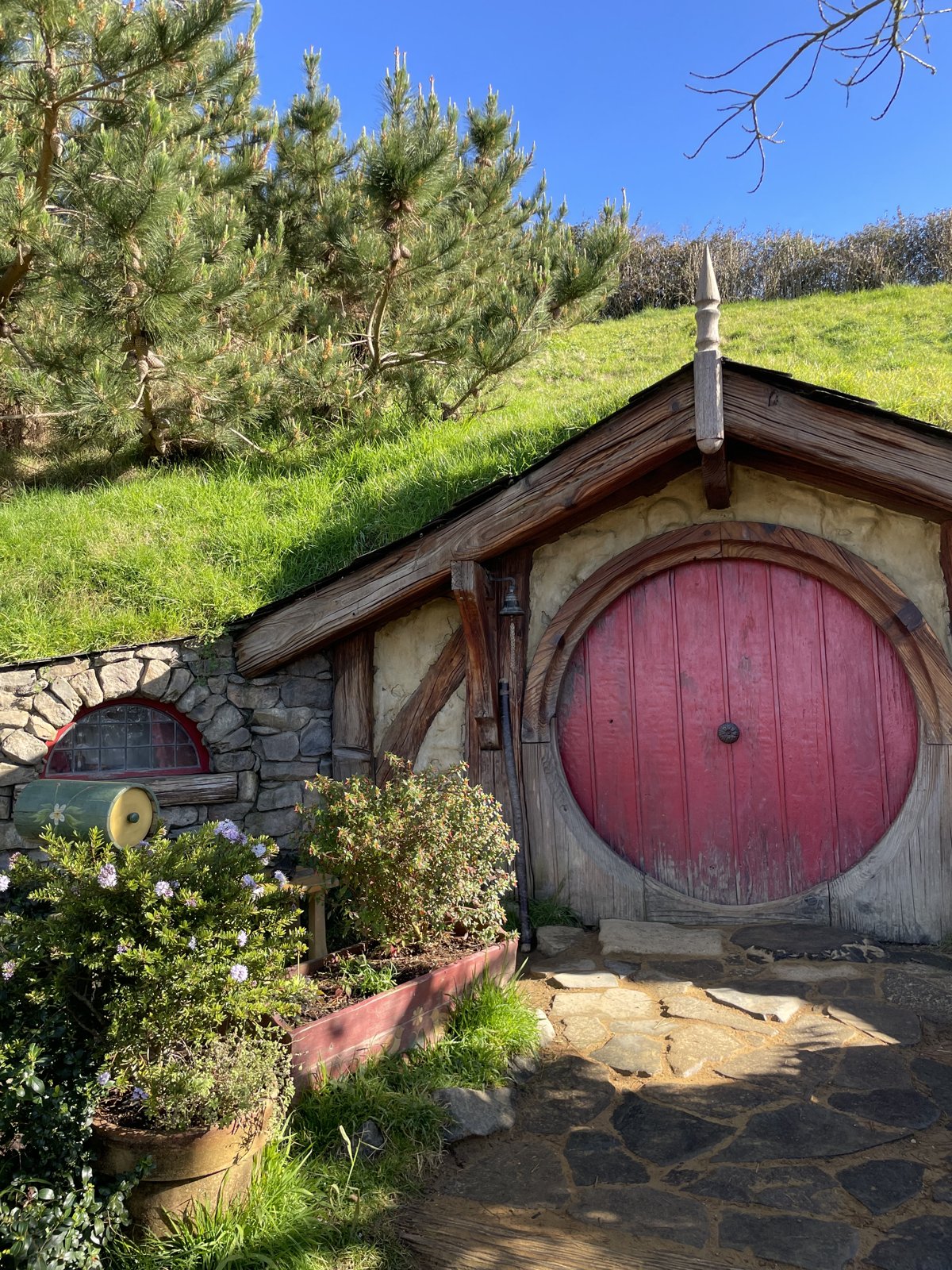
Hobbiton, an easy day trip from the Rotorua area — greener and tidier than any film could exaggerate. (My own photo.)
What New Zealand is like, either way
Across both trips, the same things stood out. New Zealand is green, dramatic and clean, with scenery that changes fast — fiords, mountains, lakes, coast and steaming earth, sometimes within a short drive. It feels tidy and unhurried, the kind of neatly-kept, small-town calm I always associate with the country (I've even used "like the New Zealand countryside" as shorthand elsewhere). The weather is cool and changeable, especially down south, so layers are your friend year-round. And it isn't a cheap destination — but the landscapes are the whole point, and most of the best of them cost nothing to look at.
Cruise or stay? How to choose
- Choose a cruise if you want the big overview, hate packing and unpacking, and want the fiords from the deck without the long drives. Best for a first, wide look at the country.
- Choose a land trip (like Rotorua, or self-driving) if you'd rather go deep in fewer places — soak in the thermal pools, dig into Māori culture, and set your own pace.
- Best of all, do what I did over two trips: cruise once to see the shape of it, then come back and stay somewhere properly.
Affiliate link — we may earn a commission
Go deeper
Questions
Is a cruise a good way to see New Zealand?
It's a great way to get the big picture in one trip without constant packing and driving — and the scenic cruising through the southern fiords is a genuine highlight. The trade-off is that you only get a taste of each port, so treat it as an overview that shows you where you'd like to return and stay longer.
Why does Rotorua smell like sulphur?
Rotorua sits on a very active geothermal field, so hydrogen sulphide (the rotten-egg smell) rises from the bubbling mud, vents and hot springs all over the area. It's strong when you arrive but you quickly stop noticing it — and it's the sign of a genuinely alive landscape that's the whole reason to visit.
What is there to do in Rotorua?
Geothermal parks with mud pools and geysers, natural hot springs and thermal pools to soak in, and some of New Zealand's best Māori cultural experiences, including a traditional hāngī feast cooked in the ground. It's compact and easy to get around.
Which is better, the North Island or the South Island?
They're different. The North Island has the cities, warmer weather and the geothermal wonders around Rotorua; the South Island has the big mountains, lakes and the dramatic fiords. A cruise around the country lets you sample both, which is part of its appeal.
When is the best time to visit New Zealand?
The warmer months (roughly the Southern Hemisphere summer) are the most reliable, but New Zealand's weather is changeable year-round, especially in the south, so pack layers whenever you go. Check current forecasts for your dates and region before you travel.
This guide is from my own two trips to New Zealand, with current details cross-checked since — it's general information, not a live listings guide. Cruise itineraries, tours, thermal-park access and prices change, so always check current information and prices for your dates, and follow local safety advice around geothermal areas.