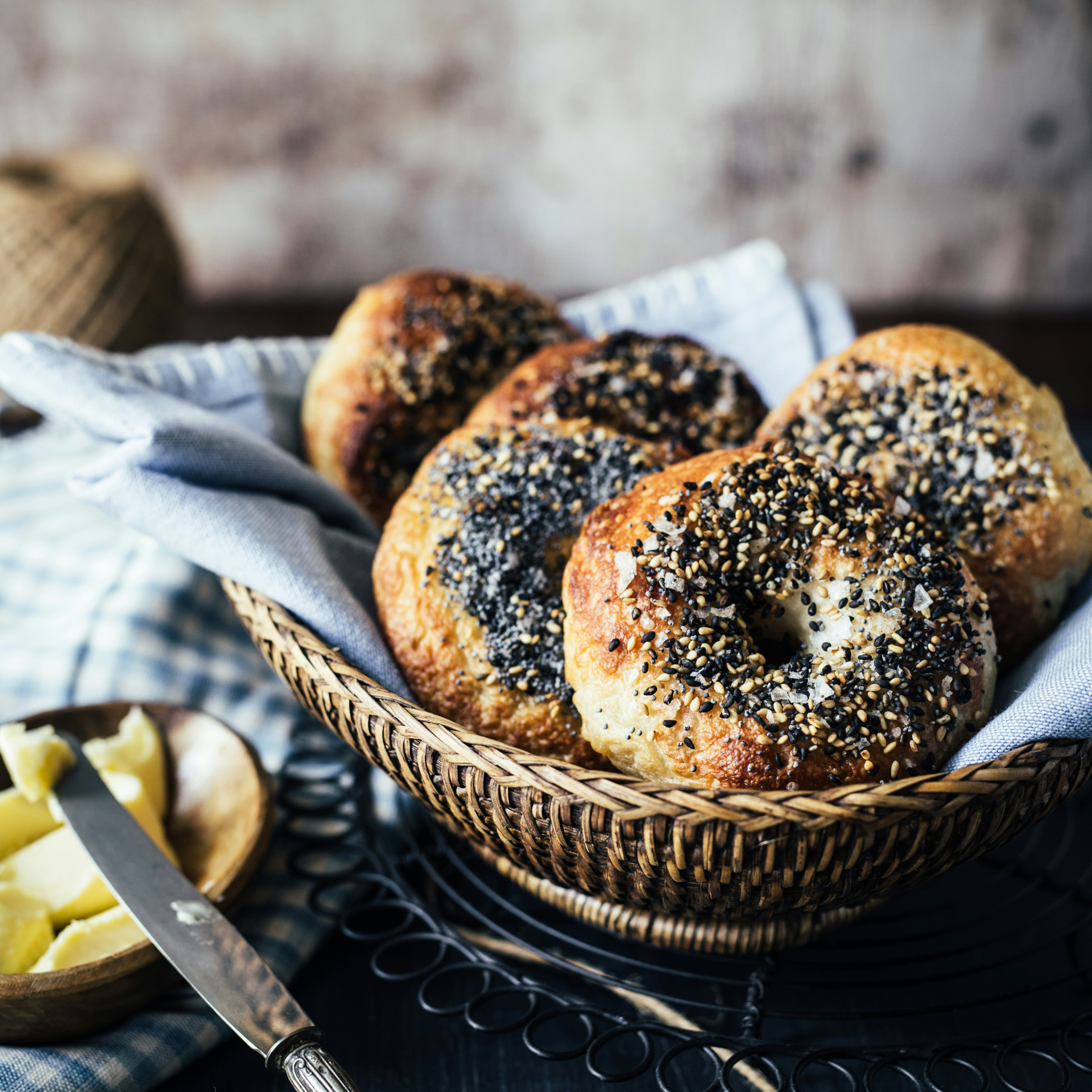
Boiled, then baked — that one extra step is the whole secret.
A real New York bagel is a small miracle of texture: a glossy, chewy crust giving way to a dense, springy middle, with a flavour that's faintly malty and deeply satisfying. It looks like a plain bread roll with a hole, but the method behind it — and the immigrant history that carried it to New York — is what separates the real thing from the soft, fluffy impostor sold as a "bagel" almost everywhere else.
From Eastern Europe to the Lower East Side
The bagel travelled to New York in the late nineteenth and early twentieth centuries with Jewish immigrants from Poland and Eastern Europe, who settled in large numbers on Manhattan's Lower East Side. They brought a ring-shaped, boiled-then-baked bread that was already part of their food culture, and it took root in the new city's bakeries. For decades, making them was a closely held craft — New York's bagel bakers were even organised into a tight-knit union, and the skill of hand-rolling was passed down rather than written down.
Over the twentieth century the bagel spread from a neighbourhood specialty to a New York icon, and then across the world — usually getting bigger, softer and less interesting the further it travelled from that original method.
Anyone can bake a ring of dough. The New York bagel earns its name in the boiling pot.
Why it's boiled before it's baked
The defining step is the one most copies skip: a true bagel is briefly boiled in water before it goes in the oven, often water with a little malt added. That quick boil sets the surface and gelatinises the starch, which is what gives the bagel its signature shiny skin and that dense, chewy interior rather than the airy fluff of ordinary bread. Skip the boil and you don't have a bagel — you have a bread roll shaped like one.
The "New York water" debate
Ask why New York bagels taste so good and someone will inevitably tell you it's the water. The city's tap water, drawn from upstate reservoirs, is relatively soft, and the long-standing claim is that this softness is the secret behind the perfect chew. It's a great story and New Yorkers swear by it — but plenty of expert bakers argue that technique, flour and the boil matter far more than the water, and that a skilled baker can make a great bagel anywhere. Treat it as a fun, unsettled piece of folklore rather than settled fact.
How to order one like a local
Go to a dedicated bagel shop (the ones with a queue and a tray of fresh, slightly shiny bagels), not a supermarket. A few pointers:
- Get it fresh. A great bagel, bought within hours of baking, is wonderful as-is. Purists argue a truly fresh, good bagel doesn't even need toasting — toasting is what you do to revive a day-old one.
- "With a schmear" means with cream cheese. Plain or scallion (spring onion) cream cheese are classics.
- The full New York move is "lox" — cured salmon with cream cheese, often with capers, red onion and tomato.
- Everything bagel — crusted with sesame, poppy, garlic, onion and salt — is the most beloved variety for good reason.
Go deeper
Questions
What makes a New York bagel different?
The method. A real bagel is boiled before it's baked, which gives it a shiny crust and a dense, chewy interior. Most "bagels" elsewhere skip the boil and come out soft and fluffy — closer to a bread roll with a hole than a true bagel.
Is it really the New York water?
It's a beloved theory — the city's soft water is said to be the secret — but it's hotly debated. Many bakers argue technique, flour and the boiling step matter far more, and that a skilled baker can make an excellent bagel anywhere. Fun folklore, not settled science.
Should I toast a fresh bagel?
Purists say no — a genuinely fresh, good-quality bagel is best untoasted, and toasting is really for reviving a day-old one. That said, eat it however you enjoy it; just try a fresh one plain at least once to taste the difference.
What does "with a schmear" mean?
A "schmear" is a generous spread of cream cheese. Order a bagel "with a schmear" for cream cheese; add "lox" for cured salmon. Plain, scallion and the crusted "everything" bagel are the classic starting points.
This guide is researched and cross-checked rather than a personal trip report, and is general information only. Some details (like the "water" theory) are debated folklore. Shops and customs change — check locally, and mind any dietary or allergy needs before tucking in.