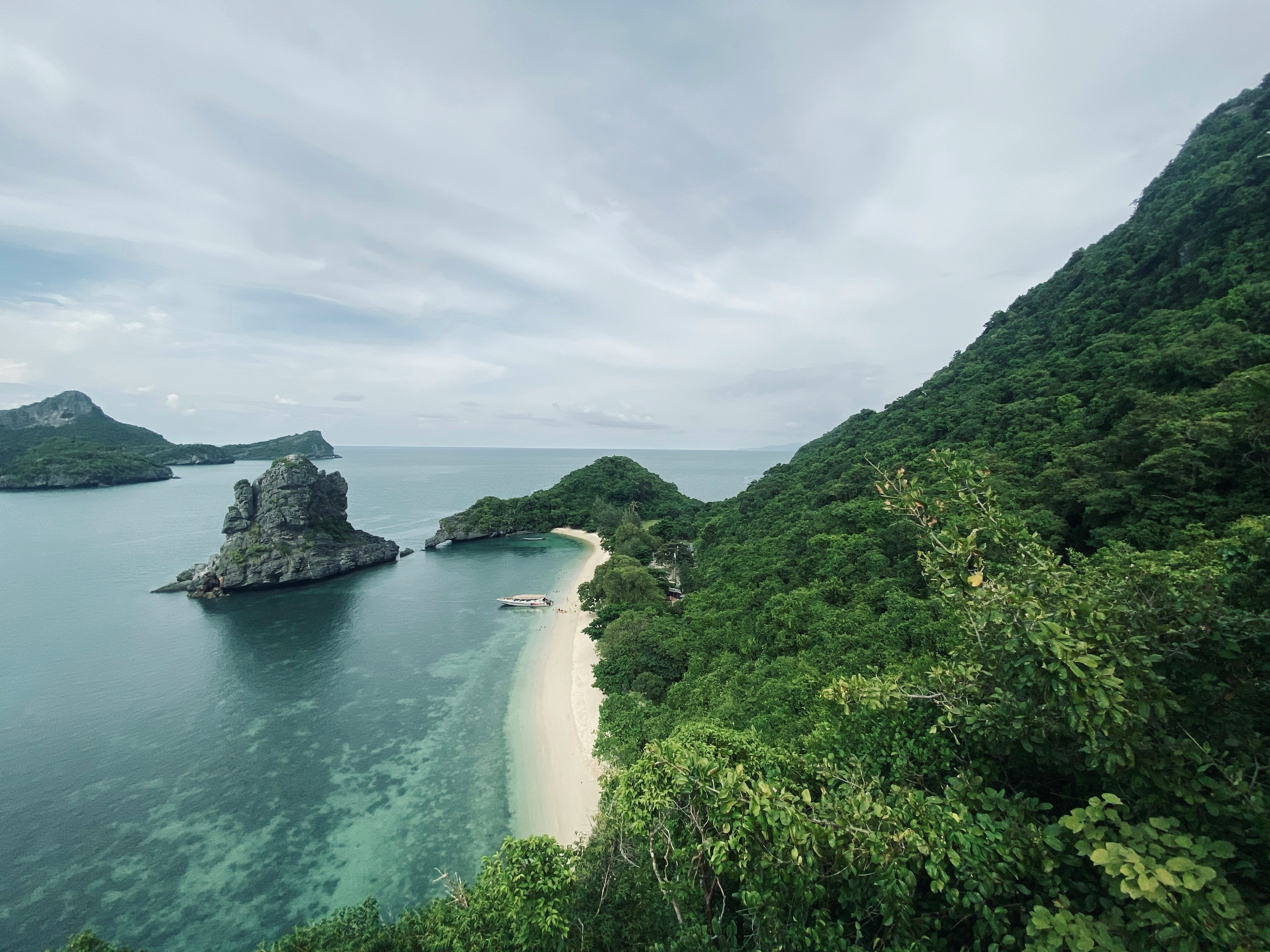
Samui and Phangan sit close together in the Gulf of Thailand, on a different coast — and a different season — from Phuket and Krabi.
Most people pick one island and stick to it. With Koh Samui and Koh Phangan, that's the mistake. They sit a short ferry apart in the Gulf of Thailand, and they're so different in character that visiting one without the other is like reading half a story. Samui is the comfortable, developed island with its own airport and proper resorts; Phangan, just across the water, is where you go for the famous party or, just as easily, for total quiet. Treat them as a pair and you get the best of both without ever unpacking twice.
The other thing worth knowing up front: this is the Gulf coast, not the Andaman side where Phuket and Krabi sit. That single geographic fact changes everything about timing — when the west coast is being rained on, Samui and Phangan can be sitting in sunshine. More on that below, because it's the detail that quietly rescues a lot of trips.
Koh Samui — the comfortable base
Samui is the larger and far more developed of the two, and that's its appeal rather than a flaw. It has its own airport (USM), so you can fly in without a long overland slog, and the island is ringed with resorts that run from solid mid-range right up to genuine luxury. If your idea of an island holiday involves a good pool, reliable air-conditioning, a spa and a real choice of restaurants, Samui is built for exactly that.
Chaweng — the busy one
The longest, liveliest beach on the island, and the centre of gravity for nightlife, shopping and the widest range of places to eat. Stay here if you want everything on your doorstep and don't mind that "everything" includes crowds and noise. It's the energetic, all-in choice.
Lamai — the slightly calmer one
Just south of Chaweng, Lamai offers a similar beach with the volume turned down a notch — still plenty of restaurants and bars, but a more relaxed feel. For many couples and families it's the sweet spot: comforts and life nearby, without being in the thick of it.
Beyond those two headline beaches, Samui's quieter corners and northern coast hold smaller, more low-key stays — useful if you want the island's easy comforts but a calmer base than the main strips.
Samui is where you sleep well and eat well. Phangan is where you decide what kind of trip you actually want.
Koh Phangan — party or peace, your choice
Phangan has a reputation, and it's earned: Haad Rin, on the island's southern tip, is the home of the legendary Full Moon Party, a huge monthly beach event that draws travellers from across the region. If that's your thing, this is the place, and the dates are worth planning around.
But pinning Phangan to one beach party does it a disservice. Head away from Haad Rin and the island changes completely: quiet northern coves, a slower pace, and a well-established yoga and wellness scene with retreats and healthy cafes. Plenty of people come to Phangan and never go near the party at all. The island genuinely serves both crowds — you just have to choose your side of it when you book.
- Want the party? Base near Haad Rin, and check when the next full moon falls.
- Want the quiet? Look to the north and the smaller bays, well away from Haad Rin's energy.
- Want wellness? Phangan's yoga and retreat scene is one of the most developed in the region — a real reason to come in its own right.
And Koh Tao, if you dive
Further north again sits Koh Tao, long known as one of Thailand's go-to budget scuba-diving islands. If learning to dive (or diving cheaply) is on your list, it slots neatly onto the end of a Samui–Phangan trip via the same ferry network.
Where to stay, by budget
Across both islands you'll find a genuinely wide spread, so a backpacker and a honeymooner can both be happy here. As a rough sense of what to expect — always check live prices for your dates, as they swing with season and with events like the Full Moon Party:
- Tight budget — guesthouses, hostels and basic bungalows, easiest to find on Phangan and in Samui's less central spots.
- Mid-range — comfortable aircon resorts with pools, especially around Lamai and the quieter Samui beaches. The sweet spot for most travellers.
- Splurge — Samui carries the island's polished, high-end resorts, where you pay a real premium for the setting and the service.
Getting there
There are two honest routes, and they trade money against time. The quick, comfortable one is to fly straight to Koh Samui (USM) — the island has its own airport, so you land and you're basically there. The cheaper one is to fly to Surat Thani on the mainland and take a bus-and-ferry combination across to the islands; it takes longer and involves a couple of changes, but it can cost noticeably less, which matters on a longer trip.
Once you're in the area, regular ferries connect Samui, Phangan and Koh Tao, so hopping between them is straightforward — it's what makes the two-island (or three-island) trip so easy to string together. As with any island crossing, sea conditions can affect schedules, so leave a little slack rather than booking a tight onward flight on a travel day.
When to go (and why it's not the same as Phuket)
This is the part travellers most often get wrong. Because Samui and Phangan are on the Gulf coast, their season runs differently from the Andaman side. The driest, most reliable window here is roughly January to April, while the wettest stretch tends to come around October to December with the northeast monsoon. The practical upshot is the useful bit: when Phuket and Krabi are getting rained on, the Gulf islands can be sunny — so if your dates fall in a tricky Andaman month, swapping coasts to Samui and Phangan can save the holiday.
Samui and Phangan are easiest when the moving parts are sorted in advance — island-hopping and snorkelling tours, the Samui–Phangan–Koh Tao ferries, and day trips out to the Ang Thong marine park. Comparing and pre-booking beats haggling on the sand.
Browse Samui & Phangan tours and ferries →How to pair them
- Base on Samui first for the comforts — settle in, sleep well, eat well, and use it as your easy landing pad.
- Ferry over to Phangan for a few nights and pick your side: the party near Haad Rin, or a quiet northern cove and the wellness scene.
- Add Koh Tao on the end if diving appeals — same ferry network, budget-friendly, and a natural extension.
- Check the full moon date either way — to catch the party, or to deliberately avoid the crowds and prices around it.
None of this is complicated once the shape is clear. The reason people remember Samui and Phangan fondly is almost always that they got the combination right: the comfortable island for the bulk of the trip, the characterful one next door for the part that makes the story. Get the season right too, and you've sidestepped the single biggest planning trap on this coast.
Go deeper
Questions
Are Koh Samui and Koh Phangan worth visiting together?
Yes — that's the smart way to do it. They sit a short ferry apart and have very different characters: Samui for resort comfort, Phangan for either the famous party or genuine quiet. Pairing them gives you both without a long journey in between.
Should I stay on Samui or Phangan?
Base on Samui if you want comforts — proper resorts, a wide choice of restaurants, and the island's own airport. Choose Phangan if you're after the Full Moon Party near Haad Rin, a quiet northern cove, or its yoga and wellness scene. Many travellers do both.
When is the best time to go?
Roughly January to April is the driest, most reliable window, while around October to December tends to be the wettest with the northeast monsoon. Crucially, this Gulf season runs differently from Phuket's, so the islands can be sunny when the Andaman side is wet.
Is it expensive?
It spans a wide range. Phangan leans cheaper with guesthouses and bungalows; Samui carries the more polished, higher-end resorts. Prices swing with the season and spike around the Full Moon Party, so check live rates for your dates rather than relying on a single figure.
How do you get there?
Either fly straight to Koh Samui (USM), which is quickest, or fly to Surat Thani on the mainland and take a cheaper bus-and-ferry combination across. Once you're there, regular ferries link Samui, Phangan and Koh Tao.
This guide is researched and cross-checked rather than a personal trip report, and is general information only. Costs are given as rough bands because they vary with season, operator and exchange rates — always check current prices, ferry schedules and any travel advisories for your dates before booking.