A few coins, a sesame ring, a glass of tea — that's an Istanbul breakfast.
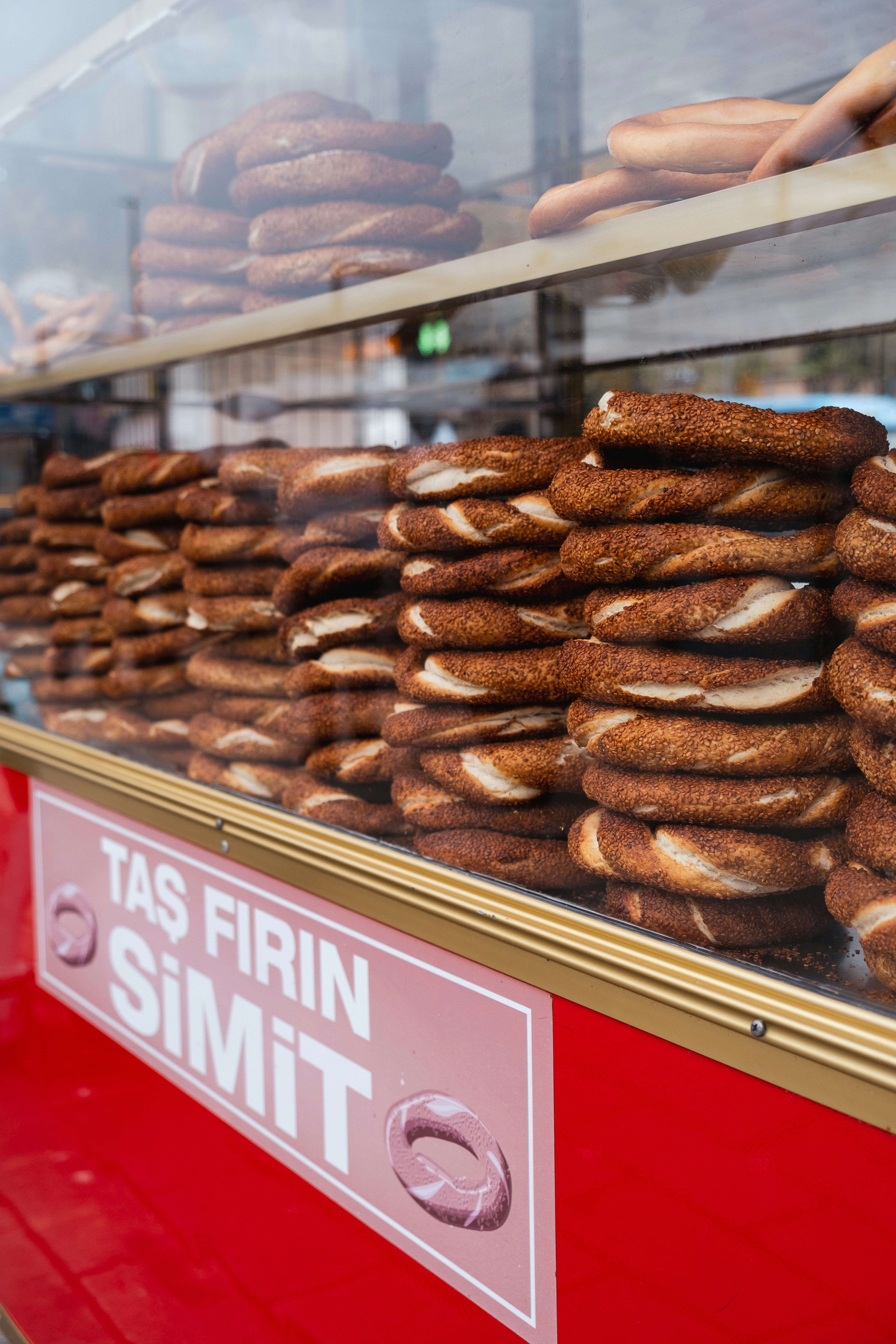
If a single food could stand in for a whole city, in Istanbul it might be the simit: a circular bread, crusted all over with toasted sesame, chewy inside and lacquered to a deep glossy brown. You'll see it stacked on red carts and balanced on trays from the ferry docks to the back streets, and you'll see it eaten by everyone — commuters, students, grandmothers — at every hour of the day. It's cheap, it's everywhere, and it's the kind of food that tells you more about a place than any restaurant could.
What simit actually is
At its simplest, simit is a ring of yeasted wheat dough, boiled or dipped and then baked until it's crisp outside and tender within, with sesame seeds clinging to every surface. What gives it that distinctive look and flavour is a step before baking: the rings are dipped in diluted pekmez — grape molasses — which is why the crust comes out glossy, deep-coloured and faintly sweet, and why the sesame sticks and toasts so beautifully. You'll sometimes hear simit called a "Turkish bagel," and the family resemblance is real, but it's not quite the same thing: the method differs, the molasses dip is its own signature, and the texture tends to be lighter and more brittle than a chewy bagel. Treat the bagel comparison as a friendly shorthand rather than a recipe.
Simit has a long history in the city — Ottoman-era records mention sesame rings sold in the streets centuries ago — though the exact origins and dates get debated, and I'd be cautious of anyone who gives you a too-tidy timeline. What's not in doubt is that it long ago settled into the role it still plays: the everyday bread of ordinary people, sold on the move for small money.
The simit has nowhere to hide. Plain bread, sesame, a little sweetness — and a whole city's appetite riding on it.
Where simit sits in Turkish bread culture
To understand simit, it helps to see how much bread runs through Turkish eating in general. It's not a side dish so much as a constant presence at the table:
- Ekmek — the everyday loaf, the plain white bread that turns up at almost every meal and gets torn, dipped and used to scoop.
- Pide — a soft, boat-shaped flatbread, often topped and baked; the round version (Ramazan pidesi) is especially associated with Ramadan.
- Lavaş — a thin, soft flatbread good for wrapping and mopping.
- Bazlama — a thicker, fluffy griddle flatbread, homely and a little chewy.
Against that backdrop, simit is the street member of the family — the one you don't sit down for, the one you carry. Where ekmek belongs to the table, simit belongs to the pavement, the ferry rail and the morning commute.
How it's made and sold
The making is honest work: mix and prove the dough, shape it into rings (often by twisting two strands together for that rope-like look), dip in the watered-down grape molasses, roll generously in sesame, and bake hot until the crust crackles and darkens. The reward is a ring that's crisp at the edges, chewy at the core and nutty all over.
The selling is half the charm. Simit is the territory of the simitçi — the street vendor — who works from the familiar red carts and glass cases, or carries a tray stacked high, sometimes balanced on the head, calling out as they go. You'll find them thickest where people pass through: around the ferry terminals, along the Bosphorus, at squares and transport hubs, near mosques and markets. Because simit is best fresh, the good carts turn over their stock quickly, and a warm one straight from a busy vendor is a different thing entirely from a tired one that's been sitting since morning.
How to eat it like a local
The simplest approach is the best one: buy it fresh and warm from a cart, then eat it as you walk. For something closer to a proper Istanbul breakfast, simit slips naturally into the spread of a Turkish morning — torn and eaten alongside white cheese (beyaz peynir), olives, perhaps a little jam, and, above all, a glass of black tea (çay) in its tulip-shaped glass. The slight bitterness of the tea against the sesame and the faint sweetness of the crust is the whole point.
If you can manage it, do what costs nothing and rewards the most: take your simit and your tea down to the water, sit somewhere with a view of the Bosphorus or the ferries, and eat slowly. It's the cheapest seat in one of the world's great cities, and arguably one of the finest. Best for: travellers who love eating their way through a city on a few coins.
Go deeper
Questions
Is simit just a Turkish bagel?
It's a common shorthand, and there's a real resemblance — both are ring-shaped breads. But simit is dipped in diluted grape molasses (pekmez) and rolled in sesame before baking, which gives it a glossy, faintly sweet, deeply sesame-coated crust. The method and texture differ from a boiled-then-baked bagel, so treat the comparison as friendly rather than exact.
Why is the crust glossy and slightly sweet?
Before baking, the rings are dipped in watered-down pekmez, a grape molasses. That dip is what makes the crust shine, deepen in colour, take on a faint sweetness, and hold all those toasted sesame seeds.
Where do I buy simit in Istanbul?
From street vendors — the simitçi — working the familiar red carts, glass cases and stacked trays. They're everywhere, but cluster where crowds pass: ferry terminals, the Bosphorus waterfront, squares, transport hubs and near markets and mosques. Look for a busy cart, which usually means fresher, warmer rings.
What do locals eat with simit?
It's a classic cheap breakfast and an all-day snack. Many people eat it plain on the move with a glass of black tea (çay). As part of a fuller breakfast it pairs with white cheese, olives and sometimes jam — the tea is almost always part of the picture.
How does simit fit into Turkish bread overall?
Bread runs right through Turkish meals. There's ekmek (the everyday loaf), pide (boat-shaped, plus the round Ramadan pide), and flatbreads like lavaş and bazlama. Among these, simit is the street bread — the one you carry and eat as you walk, rather than the one you sit down to.
This guide is researched and cross-checked rather than a personal trip report, and is general information only. Recipes, customs and where vendors set up can vary and change — check locally for current information, and mind any dietary or allergy needs (sesame in particular) before tucking in.