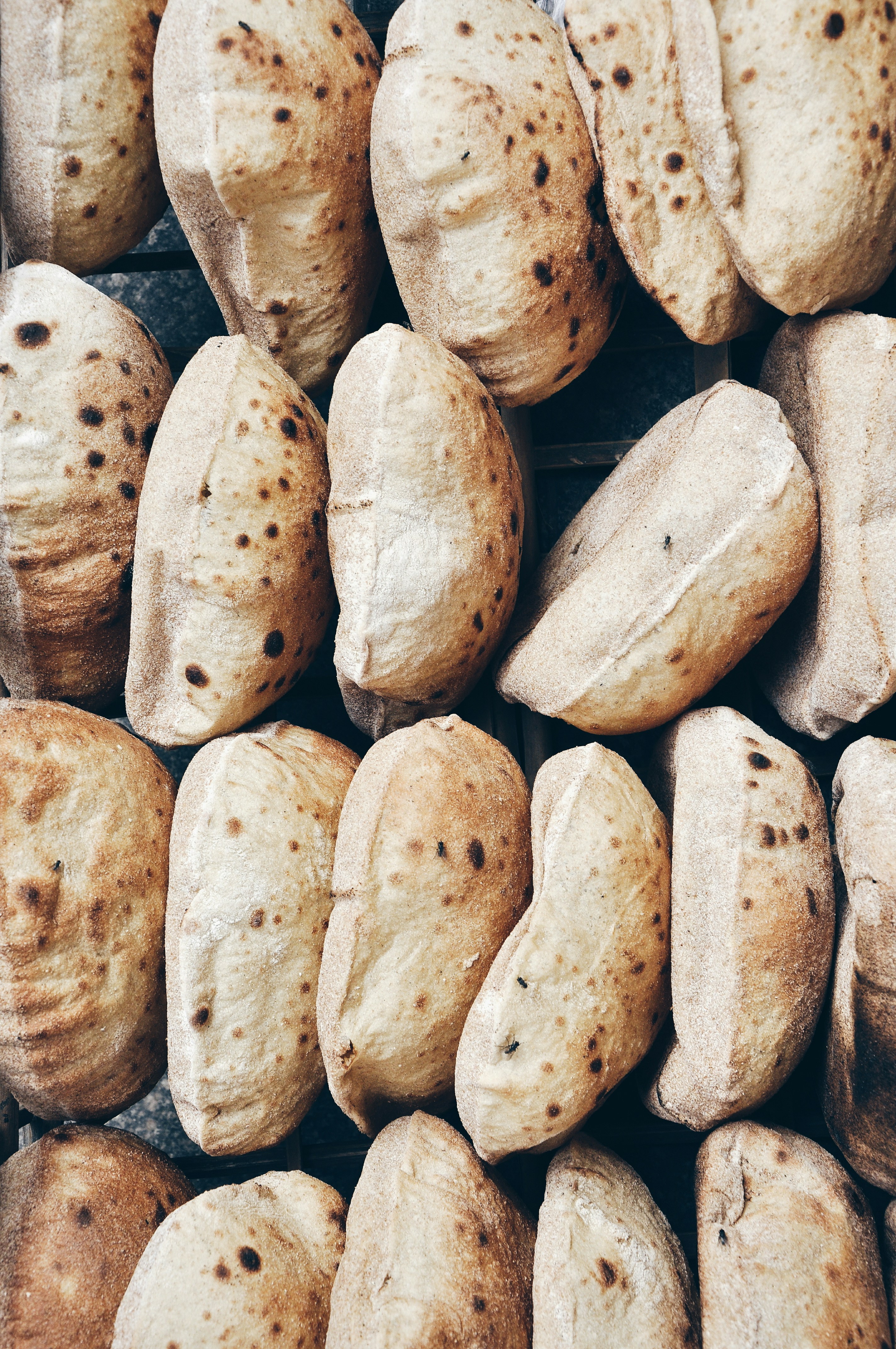
A round, bran-flecked loaf that puffs hollow in the oven — the daily bread of Egypt.
Start with the name, because it tells you everything. Across most of the Arab world the word for bread is khubz. In Egypt, the everyday bread is called aish — and aish literally means "life." When a bread is named after life itself, you don't need a guidebook to understand its place at the table. You just need to watch a Cairo neighbourhood for one morning.
What it actually is
Aish baladi — roughly "country bread" or "local bread" — is a round, flat, whole-wheat loaf. It's typically made from a high-extraction flour that keeps much of the wheat's bran, which gives the bread its slightly speckled, earthy, faintly nutty character rather than the pale softness of white bread. The dough is simple and the result is humble, and that's the whole point: this is not a special-occasion bread, it's the bread of every single day.
The drama happens in the oven. Baked in a fierce, very hot oven, each round puffs up dramatically as steam balloons inside it, then settles as it cools into a flat loaf with a hollow pocket through the middle. That pocket is not a garnish — it's the engineering that makes the bread so useful, as you'll see in a moment.
Plate, spoon and staple at once
What I find quietly remarkable about aish baladi is how many jobs one cheap loaf does. It is the staple — the carbohydrate that fills the meal and the day. It is the plate — food is piled onto it or served alongside it. And it is the spoon — torn into pieces and pinched around whatever is in the bowl, so that very often no cutlery is needed at all. One bread, three roles, and nothing wasted.
Because it's baked fresh and bought daily, aish baladi sits at the centre of ordinary life rather than to one side of it. It's typically made at neighbourhood bakeries — the furn — and carried home warm, often stacked and balanced with a casualness that comes only from doing something every day of your life. For a great many Egyptian households it is genuinely the most important item on the table, which is part of why bread is treated with such care and respect here. As someone who handles bread for a living, I don't say that lightly: a bread this central earns a kind of reverence that fancier loaves never do.
The humblest bread on a table is very often the most important one.
How to eat it
The classic way to meet aish baladi is at breakfast, and it's worth seeking out fresh and warm. You tear off a piece, fold it, and use that hollow-pocketed bread to scoop — and the two things you'll most often scoop are pure Egyptian comfort food:
- Ful medames — slow-stewed fava beans, usually dressed with oil, lemon, cumin and whatever else the cook likes. A spoonful pinched up in a fold of warm aish is one of the great cheap breakfasts anywhere.
- Ta'meya — Egypt's own falafel, made with fava beans rather than chickpeas, fried crisp and green-flecked inside. Tucked into the bread's pocket with a little salad, it becomes a sandwich in seconds.
You don't need a knife, a fork or much money for any of this — and that, again, is the genius of it. The bread is the utensil. Eat it the day it's baked, while it still has some warmth and softness, and you'll understand quickly why a Cairo morning smells the way it does.
A small note of respect
It's worth approaching aish baladi the way Egyptians do: as something that matters. This is everyday food that carries real cultural weight, and the simplest, most genuine way to enjoy it as a traveller is to eat it where locals eat it, fresh from a neighbourhood bakery or a busy ful-and-ta'meya stand, and to treat the bread itself with the same care its name implies.
Go deeper
Questions
Why is Egyptian bread called "aish" and not "khubz"?
In most of the Arab world the word for bread is khubz. In Egyptian Arabic the everyday bread is called aish, which literally means "life." It's a striking choice of word, and it reflects how central this plain, daily bread is to ordinary Egyptian life.
What does aish baladi taste like?
It's a whole-wheat flatbread made with a bran-rich, high-extraction flour, so it's earthier and a little nuttier than pale white bread, with a soft, slightly chewy texture when fresh. It's designed to carry other flavours — beans, falafel, dips — rather than to dominate them.
Why does it puff up with a hollow pocket?
It's baked in a very hot oven, where steam trapped inside the dough balloons it up dramatically. As the loaf cools it settles flat, leaving a hollow pocket through the middle. That pocket is what lets you tear, fold and scoop — turning the bread into both plate and spoon.
What do you eat with aish baladi?
A classic Egyptian breakfast pairs it with ful medames (stewed fava beans) and ta'meya (Egyptian falafel made from fava beans). You tear off a piece of warm bread and use it to scoop the beans or to wrap the ta'meya into a quick sandwich — no cutlery required.
Where do I find good aish baladi as a visitor?
Look for a neighbourhood bakery — the furn — or a busy local stall serving ful and ta'meya, where the bread turns over constantly and is sold fresh and warm. Eating it the same day, where locals eat it, is both the tastiest and the most respectful way to enjoy it.
This guide is researched and cross-checked rather than a personal trip report, and is general information only. Customs, bakeries and local practices vary and can change — check locally for current information, and mind any dietary or allergy needs before tucking in.